








Heritage

Season 26
Types de médias
  • Photos
  • Vidéos
  • Sons
Années
  • 2026
  • 2024
  • 2023
  • 2022
  • 2021
  • 2020
  • 2019
  • 2018
  • 2017
  • 2016
  • 2015
  • 2014
Afficher les résultats (121)
supprimer tous les filtres
  • News
  • Gallery
  • Gitana 18
  • Team
  • Retractable Y-shaped foils, adjustable in three dimensions

    Inspired by the appendages of the America's Cup foiling monohulls, these Y-shaped foils have a wingspan of over 5 metres. They are designed to generate powerful lift, increase power and offer a wide range of adjustments to optimise flight at every point of sail and in all conditions. Beyond their impressive size, these foils feature many unique innovations.

    Revolutionary U-shaped rudders

    These are probably the most visually striking innovations on the new Maxi Edmond de Rothschild. To fly high above rough seas while maintaining control, the team wanted very long rudders that would remain in contact with the water. The challenge is that longer rudders tend to flex under load, severely affecting steering and the efficiency of their lifting surfaces. A new geometry was needed to give these appendages maximum stiffness, resist cavitation and ultimately improve control of the boat and make better use of its power. The result is a set of U-shaped rudders over 4 metres long, a metre longer than those on Gitana 17. Their shape, reminiscent of a tripod or an inverted π, is only the visible part of what makes them so distinctive.

    A daggerboard optimised to stabilise the boat and limit cavitation

    With its wide span, the daggerboard resembles an aircraft tail assembly, with two adjustable flaps: one on the vertical section and the other on the horizontal section, the distinctive “manta-ray wing”. On Gitana 18, the innovation is to position this wing behind the vertical part of the appendage, rather than directly beneath it, to minimise flow disturbance and cavitation.

    Gitana 18’s daggerboard

    Rig: adjustable spreaders to control mainsail power while sailing

    Gitana 18’s mast is 1.50 metres taller than its predecessor’s. The boom is also shorter, creating a more slender sail plan. The major innovation is a set of spreaders that can be adjusted while sailing to bend the mast fore and aft. Actuated by hydraulic rams, these spreaders can pivot through 35 degrees to adjust the bend in the middle of the mast. This unprecedented system allows the sailor to control mainsail power: adding depth in light winds to take off sooner, or flattening the sail to reduce power at high speed or in strong winds. Adjusting the depth, and therefore the power, of the mainsail can also save a solo sailor time and energy by reducing the need for risky manoeuvres or headsail changes.

    Central hull:
    an integrated, structural coachroof

    The naval architects and Gitana design team wanted an exceptionally stiff, structurally robust platform. This applies both to the floats, which must withstand heavy loads from the foils and rudders, and to the central hull, which is subject to torsion. The enclosed coachroof is integrated into the hull and contributes to its structural strength. Inside, the cockpit brings all sail-handling controls together, with ergonomics shaped by many hours of design and development. The coachroof also stands out for the number and size of its windows. This configuration meets the visibility requirements of the Ultim class rules and gives sailors the best possible view to keep a visual watch.

    Gitana 18’s coachroof

    26.01.2023

    Charles Caudrelier, from one circumnavigation of the globe to another.

    Currently awaiting favourable weather conditions to set sail on the quest for the Jules Verne Trophy with the crew of the Maxi Edmond de Rothschild, Charles Caudrelier is closely monitoring progress in another round the world: The Ocean Race. For eight years, the race formerly known as the Volvo Ocean Race was part of his life and saw him secure tw…

    par Gitana

    Currently awaiting favourable weather conditions to set sail on the quest for the Jules Verne Trophy with the crew of the Maxi Edmond de Rothschild, Charles Caudrelier is closely monitoring progress in another round the world: The Ocean Race. For eight years, the race formerly known as the Volvo Ocean Race was part of his life and saw him secure two wins out of three participations. He discusses his memories and his take on the new formula and the skippers who dream of succeeding him on the winners’ list.
    “There is something special about this race”

    Renowned for being tough and demanding and for its ability to put both mind and body to the test, the old Volvo Ocean Race served as a springboard for the Breton skipper. Taking victory at the end of the last leg alongside Franck Cammas in 2011-2012, he went on to head up the Dongfeng Race Team. Third in 2014-2015, he finally took the win in his subsequent campaign, that too on the final leg, in 2017-2018. “For a long time, it was a childhood dream, he explains. This race has something special about it and the emotion you feel when you secure the win is wonderful.”
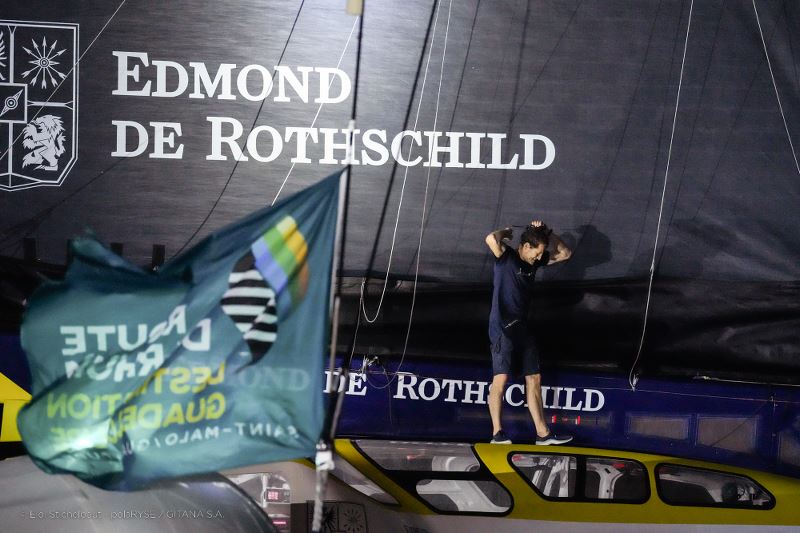
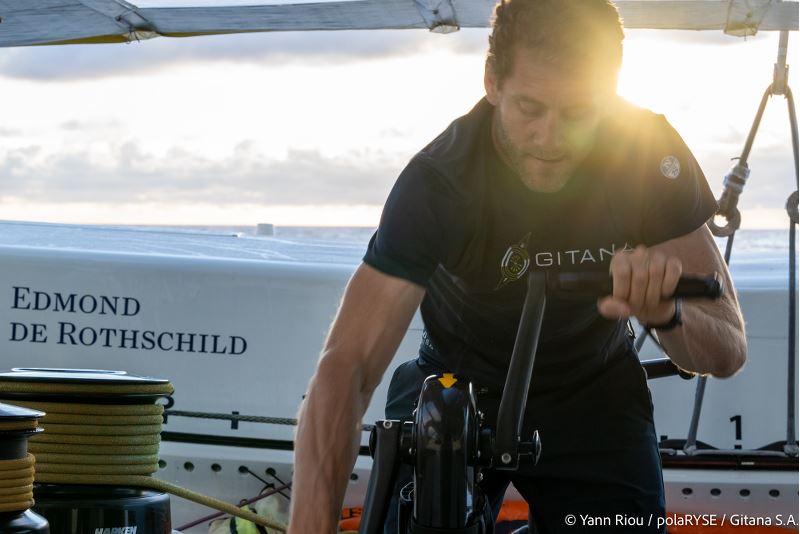
    These experiences are valuable at every level, especially with regard to dealing with fatigue, repeated effort and the complicity of a team. Another takeaway from the days spent battling it out on the deck of a VOR65, the monohull used at the time, awash with spray, is a certain idea about living together as a crew. “The major difference is that the Maxi Edmond de Rothschild is more comfortable thanks to her size and stability in flight, which plays the role of a shock absorber,” he acknowledges. In the light of his past round the worlds, the skipper highlights the importance of “choosing the right people to make up his team,” knowing how to “call oneself into question”, taking care to “avoid tensions” and “opting for humour to get someone to understand when they’ve gone too far.” 

    Charles makes no secret of his admiration for the skippers of The Ocean Race who make up the five crews currently having a crack at the adventure in IMOCA. “There have never been such long crewed races aboard these boats, he explains. Space is limited and comfort is minimal. They have no room to cook, to sit down properly or even to stand upright. It’s hard to imagine coping with all that for so long.”
    Exchanged glances

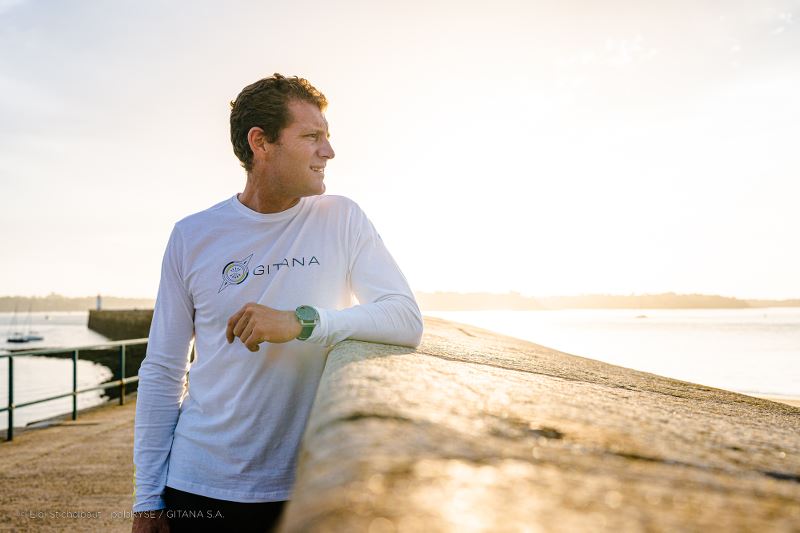
    The sailors competing in The Ocean Race are equally respectful of him. In the port of Alicante before setting sail, on 15 January, everyone had something positive to say about Charles and his latest challenge. “It’s nice to see that he’ll be setting sail about the same time as us, said Paul Meilhat (Biotherm). Along with Franck, they’re two sailors whose progress I’ve followed a great deal over recent years. It’s thanks to them that I was keen to do this race.” Kevin Escoffier (Holcim-PRB) echoes this sentiment, “Charles is very talented, he has an experienced team and the knowledge that comes with years of work.”

    “What Charles and Franck have been doing for several years is impressive, enthuses Benjamin Dutreux (Guyot Environnement-Team Europe). They always manage to be in the running for the top spot and to give their best. They’re both very inspirational sailors.” All of them are confident about their Jules Verne Trophy attempt. Jack Bouttell, a crew member on 11th Hour Racing Team and a team-mate of Charles aboard Dongfeng in 2017-2018 agrees: “I’m sure they’re capable of beating the record. I wish them all the best, in any case.” And the Australian concludes: “Fair winds guys, go for it!”