








Heritage

Season 26
Types de médias
  • Photos
  • Vidéos
  • Sons
Années
  • 2026
  • 2024
  • 2023
  • 2022
  • 2021
  • 2020
  • 2019
  • 2018
  • 2017
  • 2016
  • 2015
  • 2014
Afficher les résultats (121)
supprimer tous les filtres
  • News
  • Gallery
  • Gitana 18
  • Team
  • Retractable Y-shaped foils, adjustable in three dimensions

    Inspired by the appendages of the America's Cup foiling monohulls, these Y-shaped foils have a wingspan of over 5 metres. They are designed to generate powerful lift, increase power and offer a wide range of adjustments to optimise flight at every point of sail and in all conditions. Beyond their impressive size, these foils feature many unique innovations.

    Revolutionary U-shaped rudders

    These are probably the most visually striking innovations on the new Maxi Edmond de Rothschild. To fly high above rough seas while maintaining control, the team wanted very long rudders that would remain in contact with the water. The challenge is that longer rudders tend to flex under load, severely affecting steering and the efficiency of their lifting surfaces. A new geometry was needed to give these appendages maximum stiffness, resist cavitation and ultimately improve control of the boat and make better use of its power. The result is a set of U-shaped rudders over 4 metres long, a metre longer than those on Gitana 17. Their shape, reminiscent of a tripod or an inverted π, is only the visible part of what makes them so distinctive.

    A daggerboard optimised to stabilise the boat and limit cavitation

    With its wide span, the daggerboard resembles an aircraft tail assembly, with two adjustable flaps: one on the vertical section and the other on the horizontal section, the distinctive “manta-ray wing”. On Gitana 18, the innovation is to position this wing behind the vertical part of the appendage, rather than directly beneath it, to minimise flow disturbance and cavitation.

    Gitana 18’s daggerboard

    Rig: adjustable spreaders to control mainsail power while sailing

    Gitana 18’s mast is 1.50 metres taller than its predecessor’s. The boom is also shorter, creating a more slender sail plan. The major innovation is a set of spreaders that can be adjusted while sailing to bend the mast fore and aft. Actuated by hydraulic rams, these spreaders can pivot through 35 degrees to adjust the bend in the middle of the mast. This unprecedented system allows the sailor to control mainsail power: adding depth in light winds to take off sooner, or flattening the sail to reduce power at high speed or in strong winds. Adjusting the depth, and therefore the power, of the mainsail can also save a solo sailor time and energy by reducing the need for risky manoeuvres or headsail changes.

    Central hull:
    an integrated, structural coachroof

    The naval architects and Gitana design team wanted an exceptionally stiff, structurally robust platform. This applies both to the floats, which must withstand heavy loads from the foils and rudders, and to the central hull, which is subject to torsion. The enclosed coachroof is integrated into the hull and contributes to its structural strength. Inside, the cockpit brings all sail-handling controls together, with ergonomics shaped by many hours of design and development. The coachroof also stands out for the number and size of its windows. This configuration meets the visibility requirements of the Ultim class rules and gives sailors the best possible view to keep a visual watch.

    Gitana 18’s coachroof

    07.11.2021

    An eye-popping spectacle offshore of Le Havre!.

    In line with the long-term forecast, the weather conditions were simply perfect this Sunday at 12:27 UTC for launching the 15th edition of the Transat Jacques Vabre. The fleet of 79 boats set sail in a NW’ly breeze of 15-20 knots, whilst the five competing Ultimes, including the Maxi Edmond de Rothschild, literally took off towards Antifer and the…

    par Gitana

    In line with the long-term forecast, the weather conditions were simply perfect this Sunday at 12:27 UTC for launching the 15th edition of the Transat Jacques Vabre. The fleet of 79 boats set sail in a NW’ly breeze of 15-20 knots, whilst the five competing Ultimes, including the Maxi Edmond de Rothschild, literally took off towards Antifer and the cliffs of Etretat at the far end of the coastal course that kicks off the race. A veritable feast for the eyes!

    In short seas, with a medium wind from the perfect direction, increasing to strong in the gusts, the 32-metre giants were able to show off their true potential at the start of this Coffee Route 2021. Keen to get back into competition mode after more than two years without any race clashes, Franck Cammas and Charles Caudrelier treated us to a fabulous start by crossing the line at the head of the fleet. They rounded the Normandie mark, the first compulsory passage point, in 1st place

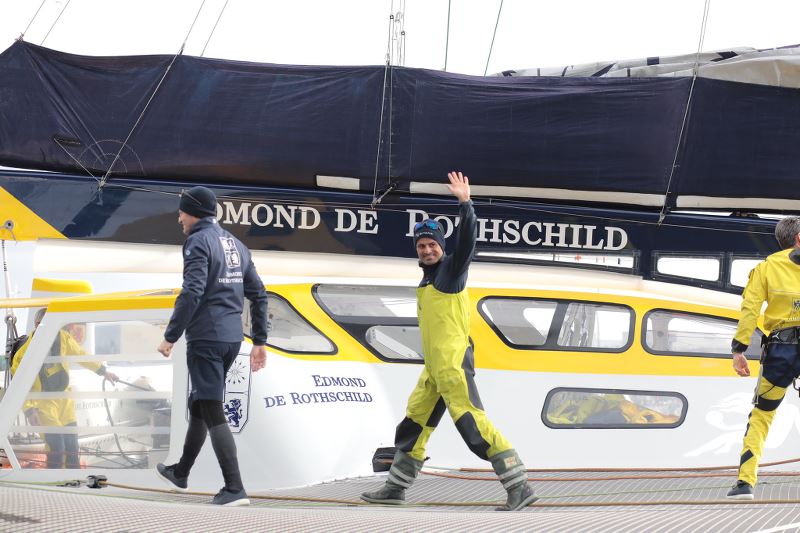
    A few minutes before casting off, the duo on the Maxi Edmond de Rothschild was in good spirits as they responded to a Q&A session before bidding farewell to the large crowds in Le Havre who had gathered this Sunday morning around the Vauban and Eure basins.

    Franck Cammas: “For the first few hours of racing, we’ll have around twenty knots of breeze. If all goes to plan, we shouldn’t have to put in any manoeuvres until the first mark at Etretat, which makes things easier because this mark is very close inshore. After that, we’ll launch onto a beat, tacking towards Cherbourg in a breeze that is set to build to around 25 knots as we approach Barfleur, then we’ll have 2 changes of tack at Barfleur before turning to make for Ushant. At that point, the wind will drop away fairly quickly after Guernsey. However, at Raz Blanchard there will still be quite a lot of breeze pushed along by the current, which will increase the apparent wind. Next, the wind will ease again as we pass Ushant. This zone will be fairly complicated, but we should be clear of it by around midnight. If we fall into the light patch of air, we’ll have to distance ourselves from the direct route in search of breeze. Conditions are not due to be hard for this start phase, which is not a bad thing for exiting the English Channel, but all in all we’re expecting things to be a bit random with light airs.”
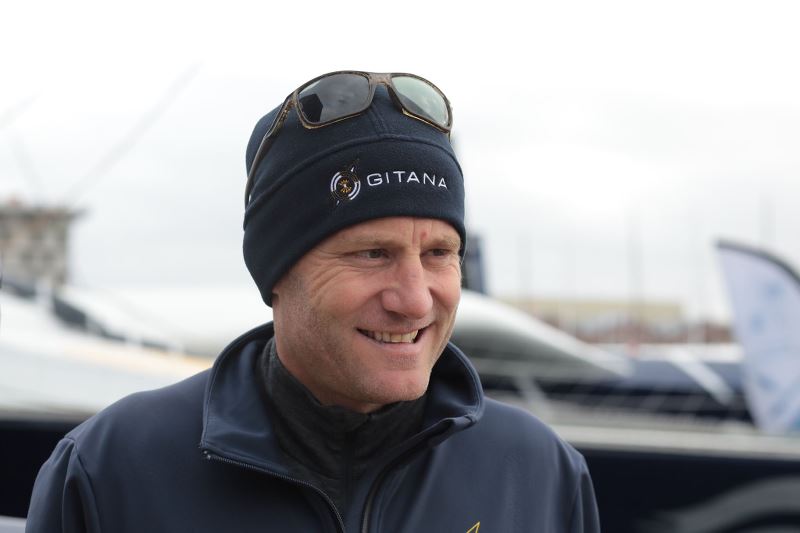
    Charles Caudrelier: “We’re feeling quietly confident, we’re well prepared and conditions aren’t overly boisterous. It’s a little stressful as the weather situation is not clear and the initial decisions we’ll have to make may be key for the rest of the race, so it’s important we don’t make a mistake. The first few days may be pretty decisive. The first boat to hook onto the breeze lower down may well get a sizeable lead. After that though, there are plenty of other things going on, including the doldrums and so on… I don’t envisage that the fleet will be bunched together as they hit the breeze. I believe that gaps will open up fairly swiftly. We’d have preferred a slightly more boisterous forecast in our battle against the new boats, which are a little less tried and tested, as we really relish such conditions with the Maxi Edmond de Rothschild, but I think that all the boats are going to be fairly versatile. We’re happy to get back into competition mode, especially in light of the fact that the line-up is even denser this time, with some new boats and some very good crews.

    Order at the Normandie mark (Etretat)
    1. Maxi Edmond de Rothschild // Franck Cammas & Charles Caudrelier
    2. Banque Populaire XI // Armel Le Cléach et Kevin Escoffier
    3. SVR Lazartigue // François Gabart & Tom Laperche
    4. Actual // Yves Le Blévec & Anthony Le Marchand
    5. Sodebo // Thomas Coville & Thomas Rouxel