








Copyright : Rolex / Carlo Borlenghi / RORC
A treacherous start
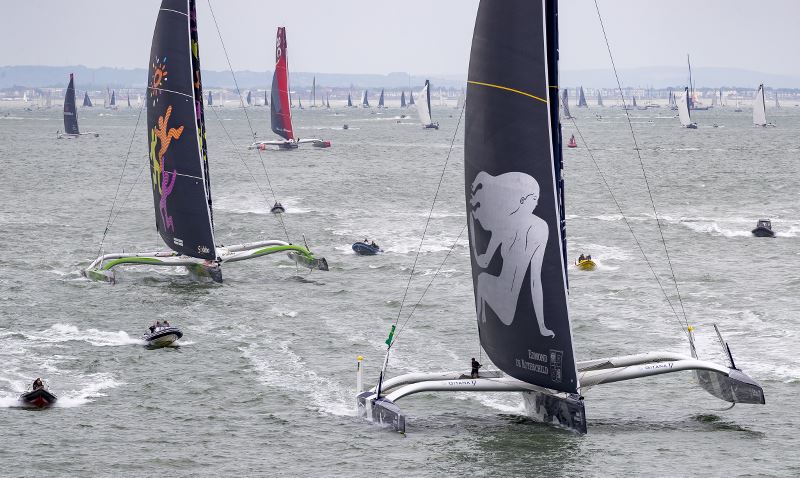
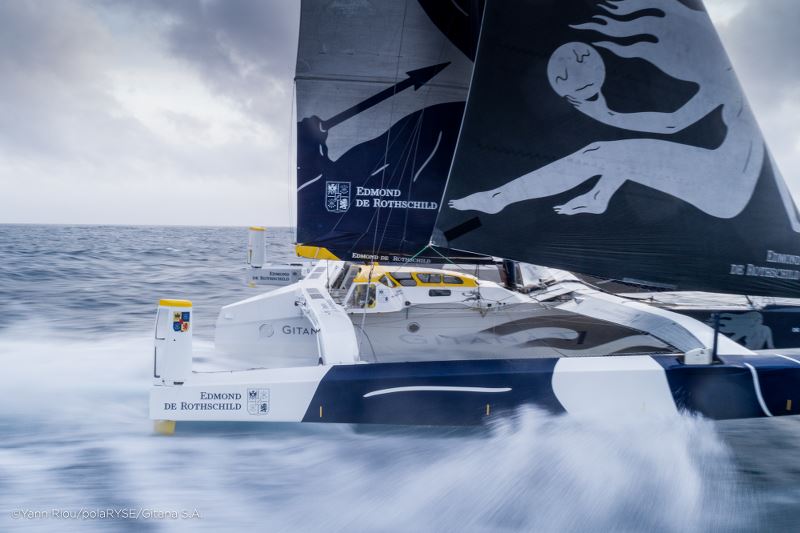
The Solent, the narrow sound which separates the English mainland and the Isle of Wight, always offers some amazing race starts. However, it’s also dreaded by sailors due to its currents, its substantial amount of shipping and the numerous sandbanks, all of which can serve as stumbling blocks on the way out. Leading the fleet, the crew of the Maxi Edmond de Rothschild unfortunately had to pay the price for their advantage. After passing the lighthouse at Hurst Point, the six sailors saw their giant come to a standstill on one of its famous banks, which was not pinpointed on the charts: “We hit a sandbank which wasn’t on the chart. We were rounding a big bank which was listed but we were quite far off it. Of course, we know that they shift a fair bit and it’s always difficult to predict. We were a bit unlucky here… It was gravel. The boat’s structure is sound, but the bottom of our daggerboard can’t be a pretty sight and it’ll handicap our progress in terms of speed in relation to our rivals. However, we’re continuing on and we’ll do all we can despite all that. It’s a shame because we’d got off to a good start! These things happen though and Macif and Sodebo were following us so they were able to alter their course,” admitted Franck Cammas to Yann Riou, our mediaman.
Compete, progress
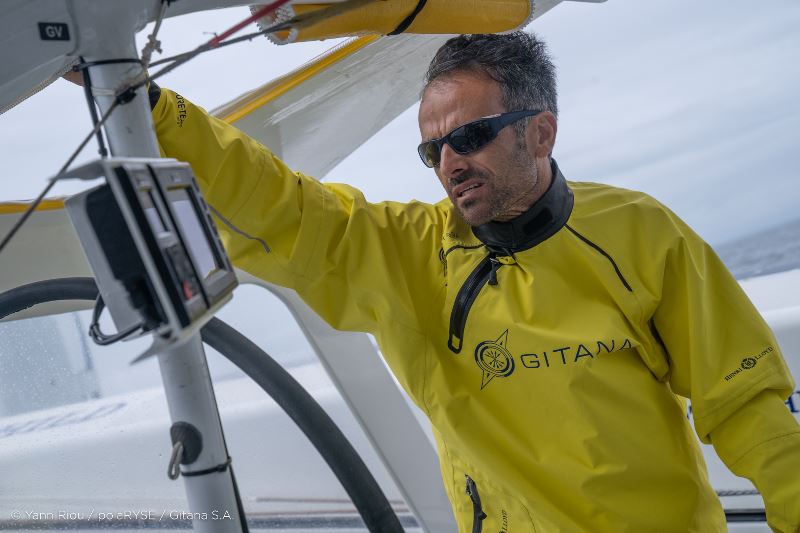
“The Rolex isn’t the main objective of our competitive season and its format is very different from what awaits us in three months’ time in the Brest Atlantiques. That said, not only is it a very fine race, which we’re always happy to be a part of, but also there are not a lot of clashes in our event schedule so every one of them is important in order to progress!” pointed out Charles Caudrelier, one of the skippers on the Maxi Edmond de Rothschild.“After the ArMen Race, this is another race that’s set to play out in light airs, at least 50% of the course we reckon, and these aren’t the most effective conditions for us… I think the ArMen enabled us to really work on that and progress. As far as the rest of it is concerned, every mile ticked off helps us take giant leaps forward in our understanding of the Maxi and how to hangle her, and in race mode that’s doubled! This will also be the first time we get to observe Sodebo in some breeze, which should be interesting.”
“A really tricky section in the transition”
The forecast for this 48th edition promises to be full of contrasts with rather light winds in the English Channel during the first night, before we rediscover a steadier south-westerly breeze in the Celtic Sea and at the end of the race. For the Ultime fleet, the return to the English Channel and the last miles of the racetrack are likely to play out in medium conditions.
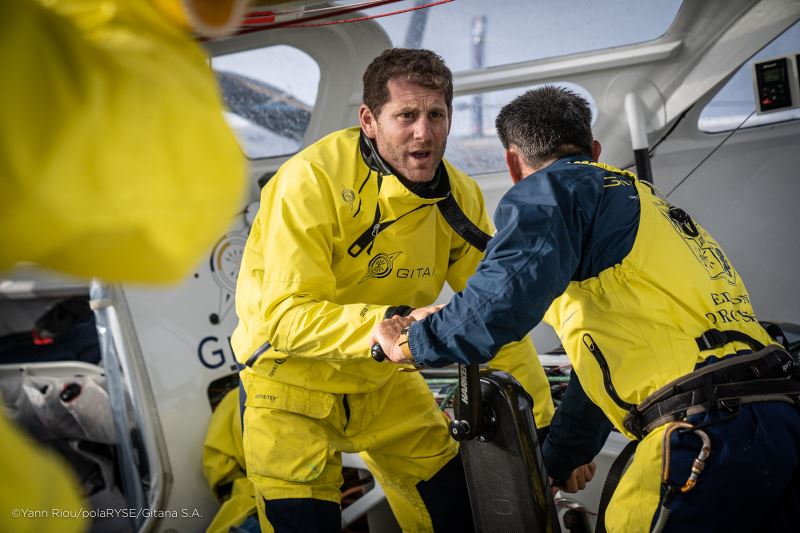
A few hours before the start, Franck Cammas gave us the low-down on the weather scenario:“The situation is anticyclonic with an E’ly breeze set to blow at the start in the Solent, then over the first few hours of the race the pace won’t be very fast. There’s a low-pressure system to the west of Ireland, which will influence our progress once we get beyond the Scillies, off the south-west tip of England. The wind will then shift round to the south and then the west, filling in until we get to Fastnet. For now, the weather models are indicating the strongest breeze there, with a good 20 knots,” announced the sailor from Aix-en-Provence, before going on to explain the impact of this situation on the race. “The general situation implies that we’ll have to deal with a transition to make the switch from the E’ly wind to that of the low pressure system. According to the latest observations, there really isn’t any breeze in this transition. It’s fairly static and wide from Plymouth to the Scillies and it may take a while to get across it… It’ll be a very tricky section, with some choices to be made in terms of our course. The first of us to make it through to the other side of this and catch onto the fresh breeze will be onto a good option.”
Course time
Is the event record for a multihull, held since 2011 by Banque Populaire V in 1 day 8 hours 48 minutes and 46 seconds in breezy conditions, set to tumble? As he set off on the 48th edition of the Rolex Fastnet Race, the skipper of Edmond de Rothschild was still struggling to reply to this question: “According to the routing, the record time remains accessible but there’s only a slender chance of pulling it off… We’re still lacking certain information to make a call on that. It’s going to be fast, as the second half of the race in the Celtic Sea will really be very quick – we should complete the passage between the Scillies and back over the course of the day on Sunday – however the transition zone and the time it’ll take to negotiate it is still an unknown quantity.”
The Ultimes are expected to make landfall in Plymouth as early as Sunday evening, following a 650-mile sprint via the famous Fastnet Rock off the south of Ireland.
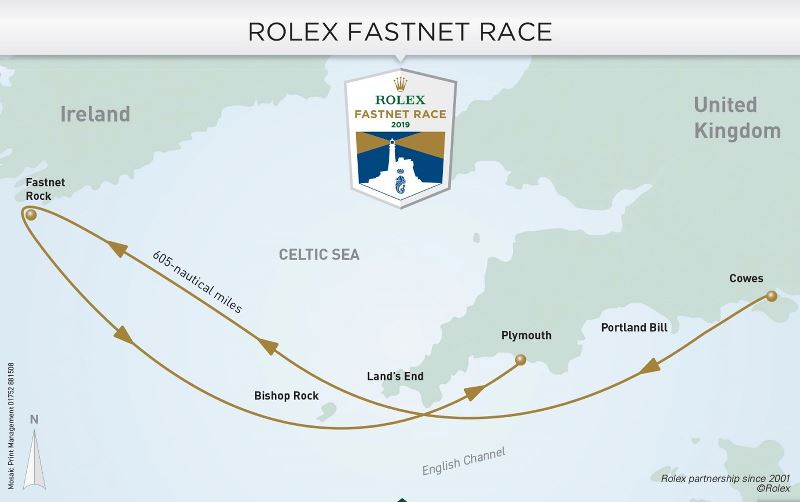
To track the fleet’s progress in the Rolex Fastnet Race: https://www.rolexfastnetrace.com/2019-fleet-tracking-race-player
Crew on the Maxi Edmond de Rothschild
Franck Cammas / Charles Caudrelier – Skippers
David Boileau / Erwan Israël / Morgan Lagravière / Yann Riou
_______________________
Did you know?
The Rolex Fastnet Race is a legendary biennial race created in 1925. Back in the sixties, Edmond de Rothschild, Benjamin de Rothschild’s father, was particularly fond of the RORC event at the helm of his monohulls. It’s thanks to one of these, Gitana IV, a magnificent 27-metre wooden yawl, that the baron and his men took victory in what he considered to be one of the most prestigious events, the Fastnet Race. It was 1965 and the crew also treated itself to the new race record – 3 days 9 hours 40 minutes – that stood for some nineteen years.