








Emotion and an enthusiastic crowd guaranteed
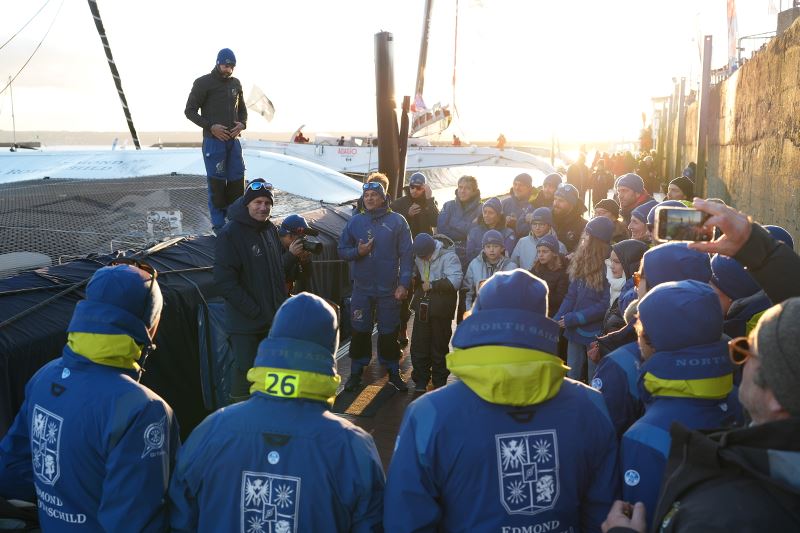
Respecting the protocol to a T, it was at 07:59 UTC on the dot that Charles Caudrelier joined the Maxi Edmond de Rothschild. However, before casting off and acknowledging the crowd who were out in force to celebrate these great sailors, the relaxed skipper of Gitana Team delighted in taking part in a pre-start Q&A session.
“Inevitably, it’s an emotional moment, but I’m trying to shield myself from all that because it’s never easy to leave land and the people you love, so I put up barriers. It’s something you do out of habit too. In the Volvo Ocean Race, I did 30 starts I think and each time it’s tough, but little by little, you learn to kind of harden yourself to all that. 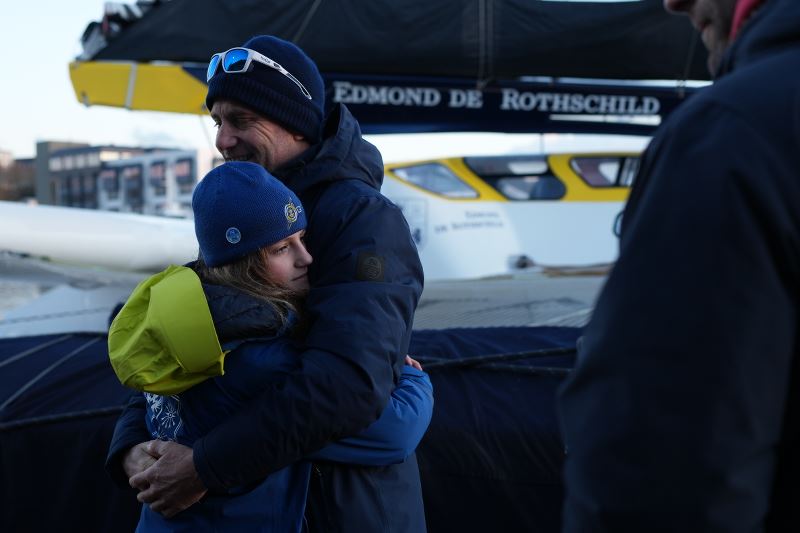
It’s a bit special. Surprisingly I feel rather serene. Perhaps there’s a slightly naïve aspect to that, but I’ve also suffered from a lot of stress at race starts and I no longer want to feel that way. As such, I’ve really decided to rise above it and then put things in perspective because compared to what’s happening elsewhere in the world, there are a lot more serious things going on.
I’ve personally chosen to be here and so I consider myself to be privileged. It’s an honour to sail on this boat, the Maxi Edmond de Rothschild. It’s an incredible opportunity, which I couldn’t have dared imagine. For me, this round the world was wishful thinking for 30 years of my career, and now that I’m actually here, it’s incredible and even better than I’d imagined, so I’m just rolling with it.”
A demanding start to the Round the World
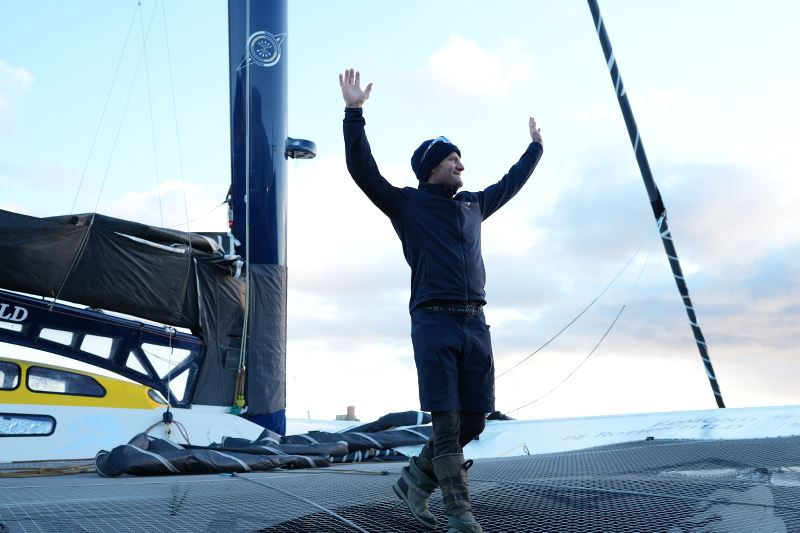
On the start line set at the exit from Brest narrows and a stone’s throw from the Fort de Bertheaume, weather conditions were ideal for gently escaping the north-west tip of Brittany, enabling the fleet to put on a fantastic show. Pushed along by around ten knots of NNE’ly wind, Charles Caudrelier and the Maxi Edmond de Rothschild got off to a conservative start, avoiding the cold sweat of the Route du Rhum. Very quickly though, Gitana Team’s sailor was back at the front of the pack and setting a course for the open ocean in the top 3. The ULTIM fleet was being led by the race youngster, Tom Laperche.

The light airs on this 7 January offshore of Brest were just as remarkable as the challenge that awaits the six pioneers of this first edition of the ULTIM round the world race. However, once these first few miles have been negotiated in ‘soft’ mode and they gradually distance themselves from land, the solo sailors in the Arkea Ultim Challenge will swiftly get into the thick of the action as the breeze is set to fill in from this evening. Indeed, the descent of the North Atlantic is shaping up to be physically demanding and strategically complex, as Charles Caudrelier revealed this morning: “We have good weather to set sail in, which wasn’t a given in light of the situation over the past few weeks. We’ll have 10-15 knots of NNE’ly on the line, which will build a little and then head in the following hours as we traverse the Bay of Biscay. We couldn’t have hoped for better for the first 24 hours, but after that we’ve got a bit of a work-up. The weather is very complicated for our descent of the Atlantic due to a big depression at its centre, which is circulating further south than usual, upsetting the whole of the normal pattern. It is causing the trade wind to stall completely. Traditionally, after 2 days, we latch onto downwind conditions with the beginnings of the trade wind of the northern hemisphere, but now we’ll likely have to wait 5 to 6 days for it. The situation will be very shifty, with a lot of transitions and manoeuvring. We’ll also have a passage with some strong breeze from the middle of next week.”

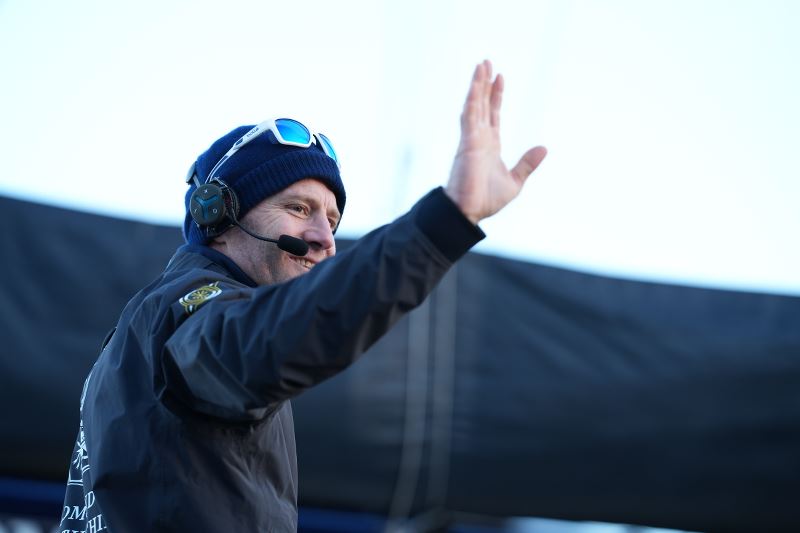
“It’s a massive challenge. It’s a first to race single-handed on our large flying multihulls… but I’m trying not to think too much about that. I’ll take things as they come and tell myself that it’s essentially a long 45-day leg! I’ve already done a 30-day stint in the Volvo so this will be just a little bit longer. I’m focused on the first section and I’m now eager to get out on the racetrack and get my teeth into it,” concluded the skipper of the Maxi Edmond de Rothschild, whose wish has now been granted.
L’ARKEA UTIM CHALLENGE – BREST
An exceptional event, an extraordinary course. More than 22,000 miles lie ahead of Charles Caudrelier and his five rivals at the start of the Arkea Ultim Challenge – Brest. It all starts with a descent of the North Atlantic and a passage through the doldrums, before switching across to the southern latitudes and setting a course towards Good Hope and the Southern Ocean. At that point, the rounding of the Antarctic takes precedence with a passage across the Indian and Pacific Ocean. Around twenty days navigating the cold and isolation, it is particularly dreaded by solo sailors. This long sea passage will take them to the legendary Cape Horn. The return to the Atlantic is often synonymous with deliverance, but the sailors know only too well that the final slog northwards is strewn with obstacles and always very difficult, with two zones of high pressure to negotiate, another Inter-Tropical Convergence Zone and above all a final section of racetrack, which can be very boisterous in winter.
The six maxi-multihull on race:
Maxi Edmond de Rothschild – Charles Caudrelier
Maxi Banque Populaire XI – Armel Le Cléac’h
SVR Lazartigue – Tom Laperche
Sodebo Ultim 3 – Thomas Coville
Actual Ultim 3 – Anthony Marchand
Ultim Adagio – Eric Peron