








A successful Mediterranean debut
The course between Concarneau and Antibes was a whole new adventure for the ULTIMs. Over the 1,700-mile racetrack stretching from Finistère to the Côte d’Azur, the five competing crews benefited from a wide variety of conditions. Everyone agreed that it was a thrilling playground, which gave rise to a rich and intense race, a sentiment voiced by Charles Caudrelier on his arrival in Port Vauban: “It was a new but really interesting course for our boats. There’s always a lot going on during this route. Conditions varied a great deal so there was a fair amount of strategy to implement. We’d never been down to the Mediterranean before with the Maxi Edmond de Rothschild and the whole of the passage through the Strait of Gibraltar and the magnificent tacks where we were flying along the Spanish coast will remain one of the absolute highlights for all the crew. Beyond the result, we really enjoyed this Finistère Atlantique and the group worked wonderfully well together. There are numerous technical and human lessons to take away from this race, which will be valuable over the coming months.”
Rudder damage, the turning point in the race
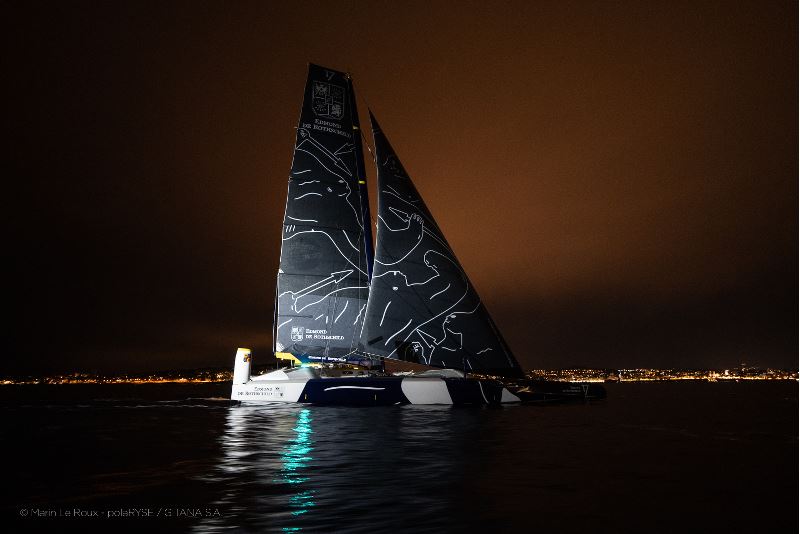
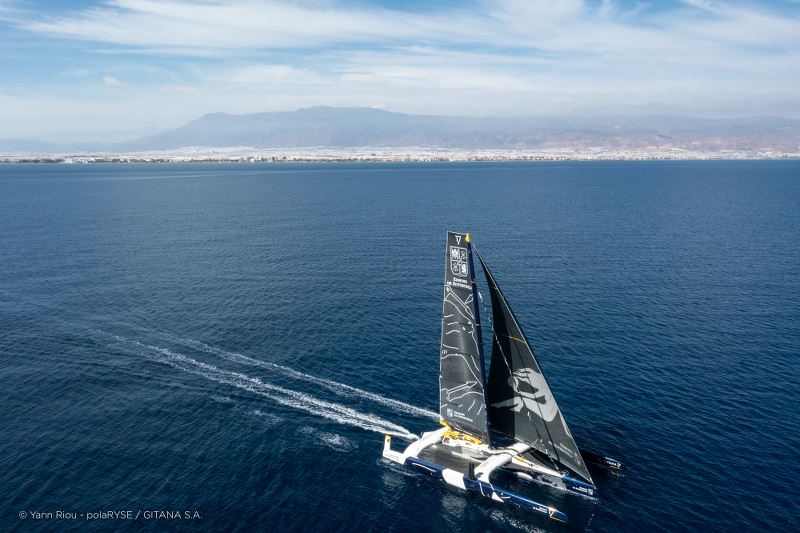
Yesterday evening, in the pitch black, moonless night off Antibes, the Maxi Edmond de Rothschild crossed the finish line three hours after her rival Banque Populaire XI, the only competitor over recent years to have deprived the five-arrow giant of victory. The men of Gitana Team battled hard throughout the four days at sea, embroiled in a relentless pursuit which saw her close on Armel Le Cléac’h’s crew. Yesterday morning, before tackling the Gulf of Lions, their 8-mile deficit gave them renewed hope of a comeback prior to the finish. However, once again, the weather favoured the leader and Banque Populaire made good her escape to secure a much-deserved victory: “We believed we were in with a chance until this morning but once again the leaders were first to hook onto more breeze and we soon grasped the fact that this was how things were going to play out! Banque Populaire secured a very fine victory thanks to a truly masterful performance where they barely put a foot wrong. In hindsight, we’re bound to have a slight regret about damaging our rudder as we rounded Finisterre. In terms of the weather and the strategy, it was certainly not a good time to lose contact… but you don’t get to choose! At the end of the first night, where we’d hunted down a low-pressure front in the Bay of Biscay, once we changed tack we noticed the damage to our port rudder around the adjustment to the lifting surface. There was nothing we could do to fix it straightaway; instead we had to wait for a light patch as we passed through the ridge of high pressure before we could intervene. The upshot of this was a significant speed deficit in relation to our rival as we were unable to fly and were 7-8 knots slower. That opened up a bit of separation at that point, which we were unable to recover. Congratulations again to them on their victory. It was a very enjoyable duel. The Maxi Edmond de Rothschild still has fantastic potential. It’s fair to say that we’d have liked to have nailed a win with her for what is sure to be her last race in the colours of Gitana but we’re keeping our sights on our future Jules Verne record attempt!”smiled Charles Caudrelier
Focus on the Jules Verne Trophy
Indeed, the Finistère Atlantique was the final race of the season for the Maxi Edmond de Rothschild before she goes on standby for the Jules Verne Trophy record attempt scheduled for early November. However, this sprint to the south of France was also the final race for the five-arrow giant in her current livery. Naturally, it was a moment tinged with emotion for all the team, who witnessed the creation of this incredible maxi-trimaran some 7 years ago. Revolutionary from the moment she was launched in 2017, the Verdier / Gitana design has paved the way forward for offshore flight and proven, through the series of prestigious wins she has racked up over the course of her young career – Rolex Fastnet Race, Transat Jacques Vabre, Brest Atlantiques, Route du Rhum, Arkea Ultim Challenge… – the value of the boldest campaigns. Plans for the team’s succession are underway of course with the launch of a new Maxi Edmond de Rothschild, which is due to complete in a year’s time. This new steed is currently in build at the CDK Technologies yard in Lorient and, just as the team has demonstrated with Gitana 17, she will be resolutely innovative.
Prior to this new chapter though, Charles Caudrelier and his men will be focusing all their motivation and their talent into another crack at the Jules Verne Trophy. This quest for the outright crewed round the world record under sail will commence in early November as they go on standby for a favourable weather window.
Ranking for the Finistère Atlantique 2024
1. Banque Populaire XI, finished on 02.10 at 19:24 hrs after 4 days 7 hours 24 mins
2. Maxi Edmond de Rothschild finished on 02.10 at 22:25 hrs after 4 days 10 hours 25 mins
3. Sodebo Ultim 3 finished on 03.10 at 06:28 hrs after 4 days 18 hours 28 mins
Still at sea: SVR-Lazartigue, Actual Ultim 3
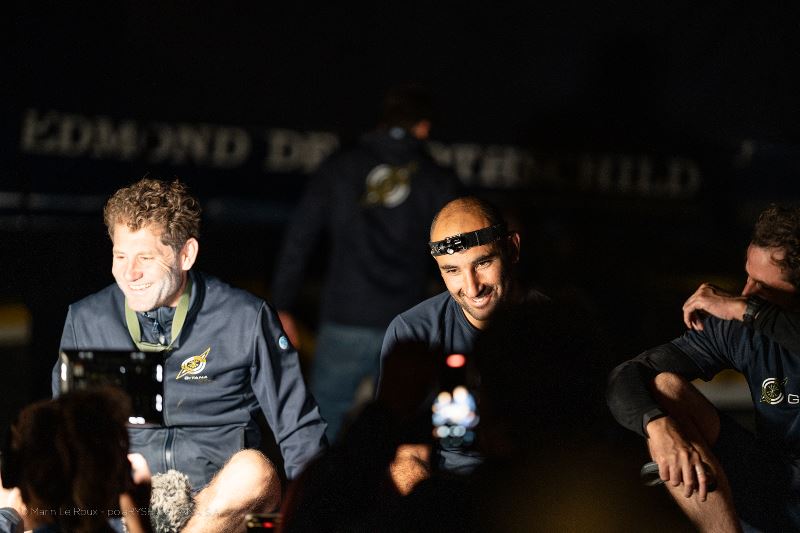
Crew on the Maxi Edmond de Rothschild
Charles Caudrelier
Erwan Israël
Benjamin Schwartz
Julien Villon
David Boileau
Yann Riou