









Fiftieth vibes
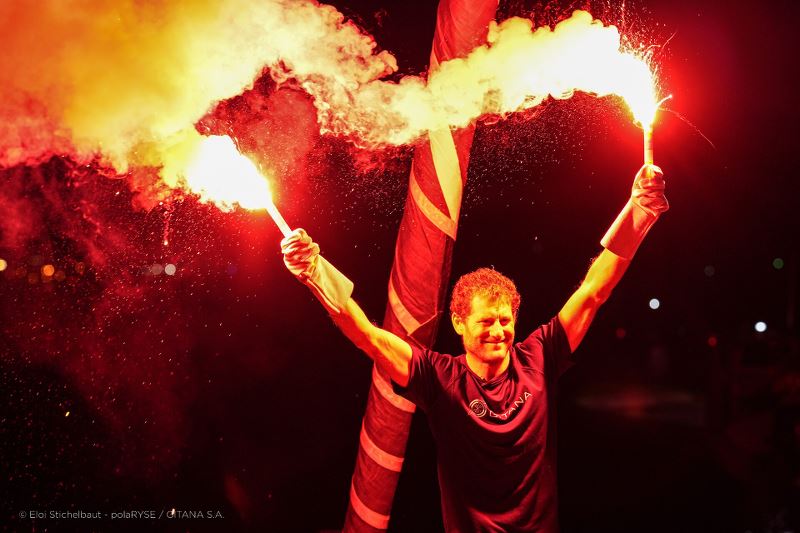
Over the past five years, Charles Caudrelier has taken the Maxi Edmond de Rothschild to the very top of the bill. Today, 300 miles from the finish in the Arkea Ultim Challenge, he is preparing himself for one of the greatest moments in his life as a sailor, a consecration, a day on from his 50th birthday.
A childhood at the water’s edge
The story began four decades earlier when the Caudreliers left Paris to settle in Beg Meil in Finistère, in his great grandparents’ home, facing onto the bay of La Forêt. Charles and his three brothers and sisters made the most of a childhood beside the water, lulled by the tides and the ballet of boats. “My father was passionate about horses first and foremost, but he has always had sailboats; small, modest 30-foot monohulls, but they sailed well,” says Dimitri, Charles’ younger brother.
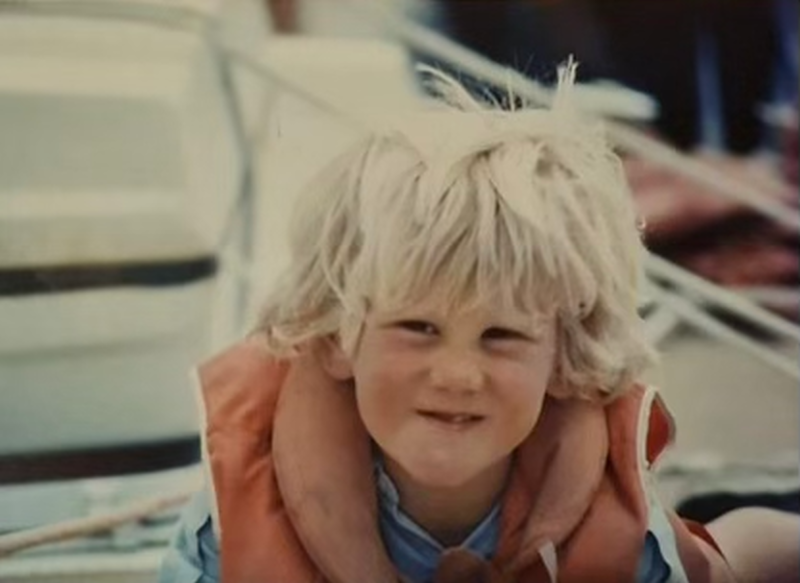
As an adolescent, Charles made a name for himself with a golf club or an epee in hand. Initially, the stretch of water he skimmed across on his windsurfer was but a playground. Soon though, the sight of solo sailors battling it out on a Figaro from his window became irresistible. The same was true of the race starts he went to watch with his father Christian. These foolhardy sailors taking on the ocean were a total fascination. So why not him?
At the school of waves
He rides the learning curve alone, absorbing all the sensitive data that colours his future environment: the sound of the chop, the whistling of the wind in the halyards. Then there is that distinctive aroma of salt, moisture and plastic, which permeates the inside of the boats, where he occasionally and surreptitiously spends the night. Sometimes, he even casts off and treats himself to a nocturnal jaunt, alone beneath the stars. “My Dad caught him out early one morning heading back towards the house under spinnaker,” recalls Dimitri.
He hits the competition scene without fanfare via local regattas and the Twenties Cup, sailing on his father’s Figaro chartered to Marc Guillemot, before knocking on the door of the Pôle Finistère Course au Large sail training cluster. In the early nineties, Franck Cammas signs him up with his gang. For Charles, it is the start of a long collaboration and a period synonymous with his first clashes with the stars of the circuit. However, keen to leave himself a way out, it wasn’t until after he’d graduated from the Merchant Navy that he became religious about offshore racing.
The partner everyone wants
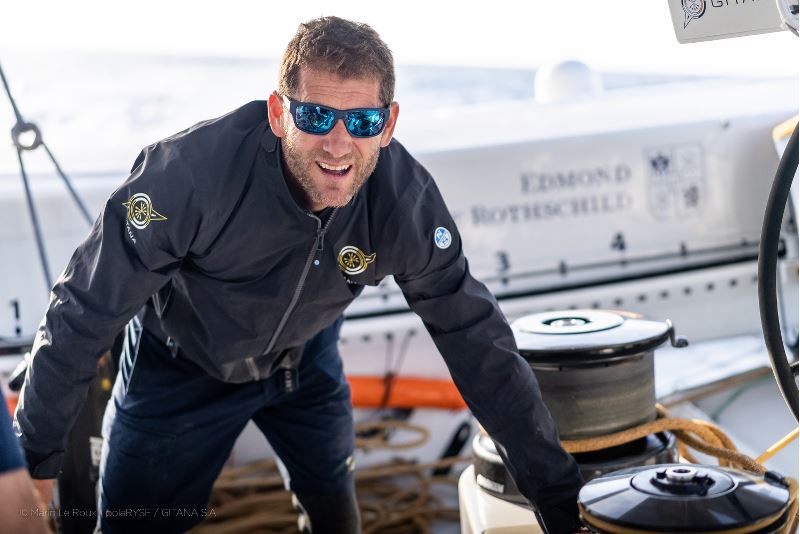
He may be late to get into it, but the results come thick and fast. In 1999, for his first Solitaire du Figaro, he dominates the rookie ranking and treats himself to a Top 10 spot, before going on to win the race five years later. This talented, serious, humble and super competitive sailor is soon snapped up: Marc Guillemot, Sébastien Josse, Pascal Bidégorry, Michel Desjoyeaux and Franck Cammas are just some of the sailors who are successful alongside him.
Longing to sail single-handed around the world, Charles takes on the role of the perfect partner. In the absence of a Vendée Globe ticket – for a very long time he tries to secure a budget to compete in the race -, he turns his attentions to crewed format instead. His peers and his comrades-in-arms are unanimous in their tributes to him today:
“I loved sailing with him! He’s no diva. He’s got his head screwed on and he’s grounded,” admits Michel Desjoyeaux. “He’s got a very strong work ethic. He’s a wonderful person and he has some great values. Everything he’s done in his life is the result of hard work. He’s really fought to get where he is today,” adds Pascal Bidégorry. “Out on the water, not a second passes when he is not in competition mode. He puts a phenomenal amount of pressure on himself to succeed. He truly embraces the notion of putting absolutely everything into his work, into the micro-details,” says one of his former co-skippers in the Transat AG2R.
Commander on the bridge
Franck Cammas was never in any doubt about his friend’s qualities. In 2010, Charles becomes his router for a victorious Route du Rhum. Next up, he joins the VOR 70 Groupama 4 in the Volvo Ocean Race. His first round the world as a navigator and helmsman results in a victory that goes all the way to the wire, to the final leg. From then on, Charles is ready to step up to the plate and take control. At 40, he captains the Chinese team Dongfeng, leading them around the globe not once but twice. This intense, collective adventure is rewarded by the finest of trophies in the 2017-2018 edition.
The Gitana adventure
In 2019, he is selected by the racing stable founded by Ariane and Benjamin de Rothschild to skipper the five-arrow Maxi. “He has developed his engineering side with us. He has really dug deep right across the board to understand flight, poured over the aerodynamic studies and worked on the simulator. In our sport, it is essential to have top-level sportsmen, who are physically primed, with a sound mind. He ticks all three boxes,” notes his friend and Technical Director Pierre Tissier. “He is very humble and there is a simplicity in the way he is and in the way he does things. He is someone who knows his place and is well aware of how lucky he is to live out his passion. He also knows how to emphasize the work of others and to share everything with his team,” says Cyril Dardashti, the boss of Gitana Team.
The man behind the sailor
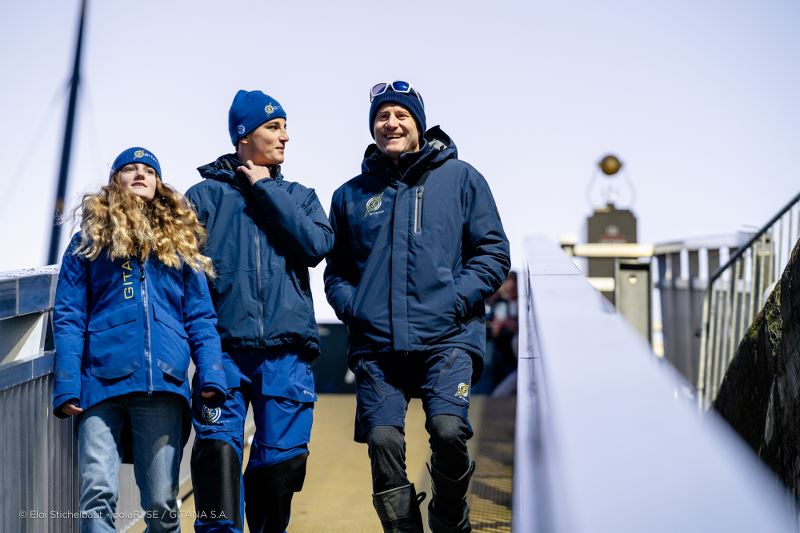
He embodies this generosity on land, when he is surrounded by his nearest and dearest, his family, his clan: around sixty of them will be awaiting his arrival dockside in Brest! And he is absolutely devoted to his two children who have virtually grown up around the world, on the docks of the Volvo Ocean Race, exchanging daily messages with his son throughout the race, trying to spare his daughter of any apprehension having promised her he “wouldn’t take any risks.”
The mark of a great athlete
Like the majority of top athletes, Charles also has his flaws. “Sometimes, he can be his own worst enemy,” admits the mother of his two children with the utmost kindness. Charles does not deny it: “when sailing single-handed, I feel like a machine, a robot connected to performance. A machine that is in it to win it, but which is constantly doubting its abilities. It can play tricks on me, but at the same time, it is this constant stress, the anxiety about losing miles, making a mistake, missing something that pushes me onwards and upwards and enables me to perform well and never let up,” he admitted a few days ago.
He will only feel a sense of release once he crosses the line tomorrow, Tuesday, at around 07:00 UTC. And once he has definitively completed his race, his personal grail, the single-handed round the world he has dreamed of his whole life.