








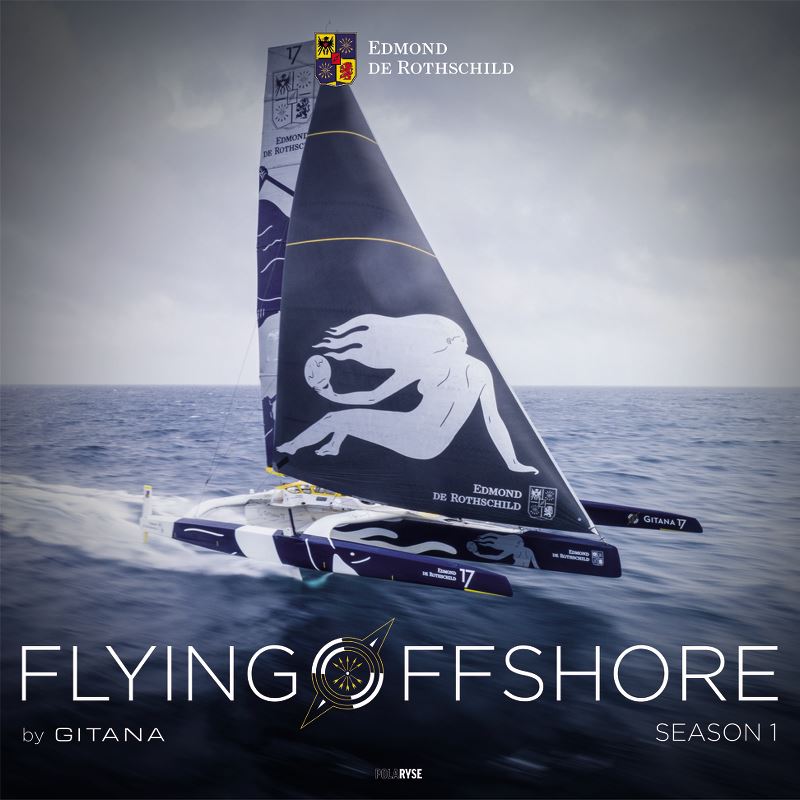
Diving into the private life of the Gitana Team
FlyingOffshore has been the Maxi Edmond de Rothschild’s signature since her launch, on 17 July 2017. Indeed, from the outset, the aim of Ariane and Benjamin de Rothschild and Gitana Team through this project has centred around building and fine-tuning the first maxi-trimaran specifically designed for flying offshore, capable of pulling off this incredible technological challenge around the planet.
It is only natural then that this is the name chosen to embody the first of Gitana Team’s documentary series. Through the five episodes that make up season 1, Yann Riou, media crew on the Maxi Edmond de Rothschild and the polaRYSE teams immerse us in the daily life of the five-arrow racing stable where centre stage is a very unique sports season against the backdrop of a global pandemic. In fact, it is this very planet, which the crew of the Maxi Edmond de Rothschild wishes to circumnavigate in style.
Taking on the Jules Verne Trophy, the outright round the world record under sail, is the primary aim of the men of Gitana Team and one of the raisons d’être for the creation of Gitana 17! The challenge is also synonymous with the desire to secure a legendary sub-40-day time in completing this planetary journey.
Five episodes to kick off the season
This first opus of Flying Offshore is the story of the initial attempts, joys and disappointments of the men aboard the boat as well as the shore team, who devise, build and prepare the Maxi Edmond de Rothschild on a daily basis.
The members of Gitana Team dedicate Flying Offshore to their owner, Baron Benjamin de Rothschild, who passed away on 15 January 2021.
✓ Episode 1
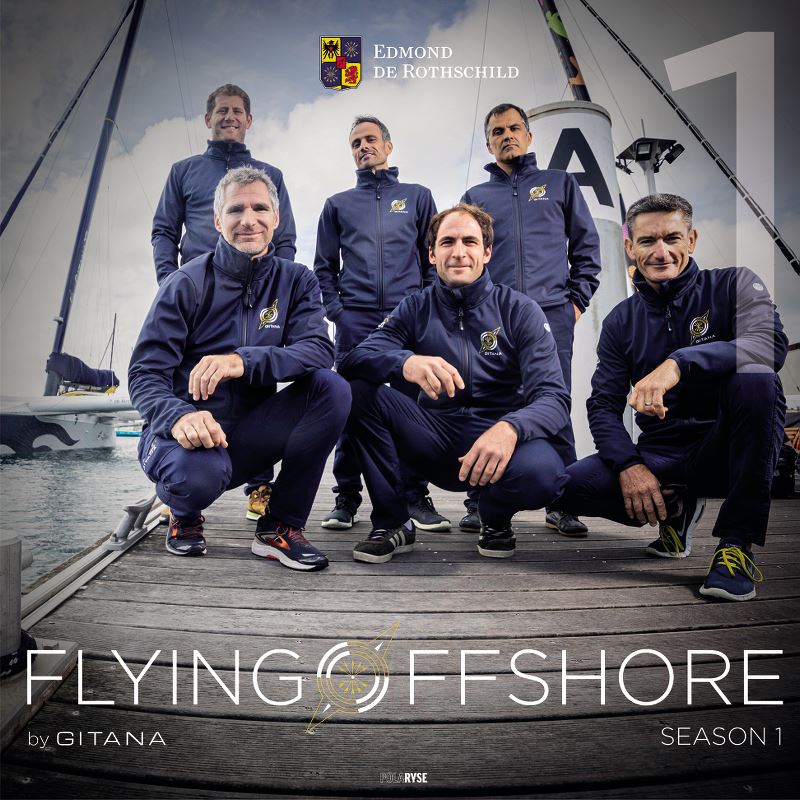
The Jules Verne Trophy is a sporting and technological challenge, but above all it’s a human story, starting with that of the sailors taking on this holy grail. The first episode explains how the group of six sailors on the Maxi Edmond de Rothschild came together and who the two great sailors are who make up the skipper pairing on the 32-metre giant. It also describes how this solid group had to cope with the injury of one of its own, which prompted the crew to adapt its preparation and make some choices.

✓ Episode 2
On paper, the Jules Verne Trophy is one of the simplest records in the world: the outright round the world record under sail. A virtual line is marked out offshore of Brest and it’s here that the start and finish play out once the three large capes have been left in its wake. The crew is free to choose its departure date and it’s the weather which guides any decision as they await the famous departure ‘window’. Choosing which moment in time to set sail has become crucial over the years given that the time to beat today no longer leaves any room for chance. In the Jules Verne Trophy, every minute counts. Before the offshore action, it’s important to deal with the waiting, which begins with daily weather briefings, hesitations, false starts and also the game of calling someone’s bluff, which is bound to liven up proceedings when a rival team covets the same Trophy. From November 2020 to January 2021, the men on the Maxi Edmond de Rothschild set sail twice in their quest for the holy grail.

✓ Episode 3
In January 2021, the second departure will be right one. The weather window is promising. Very quickly, the six men get into their rhythm on the boat and manage to get the best out of their machine, demonstrating the true potential and power of the giant. However, with speed comes increased risk, including a possible collision with a UFO (unidentified floating object), which is the bane of a sailor’s life because very often it is synonymous with breakage, a dip in performance or even retirement… Gitana 17 will not be spared, but aboard the boat, technical manager David Boileau watches over the Maxi. On a daily basis he inspects and repairs the wounds left by the miles and the ocean. He’s someone who beavers away in the background, but he’s integral to this offshore adventure.

✓ Episode 4
Offshore, the life of the sailors is reduced to the bare minimum. They are totally dedicated, night and day, to getting the boat making headway. Organised around a rotating watch system, their aim is to get the Maxi Edmond de Rothschild powered up to complete the journey back to Brest as fast as possible. Despite all that, in this precarious and at times hostile environment, life aboard, which is a far cry from their life on land, requires organisation. It’s a daily life built on compromise for the men and especially for the two skippers, who are as complementary as they are different. In the various exchanges, knowing how to strike a balance for performance is something that comes up time and again. When to be sparing with your steed and in contrast when to belt along? Opinions differ and at times discussions are lively. It is within this context that, for the first time in her history, the Maxi Edmond de Rothschild makes her entrance into the Southern Ocean, starting with the infamous Roaring Forties…
✓ Episode 5
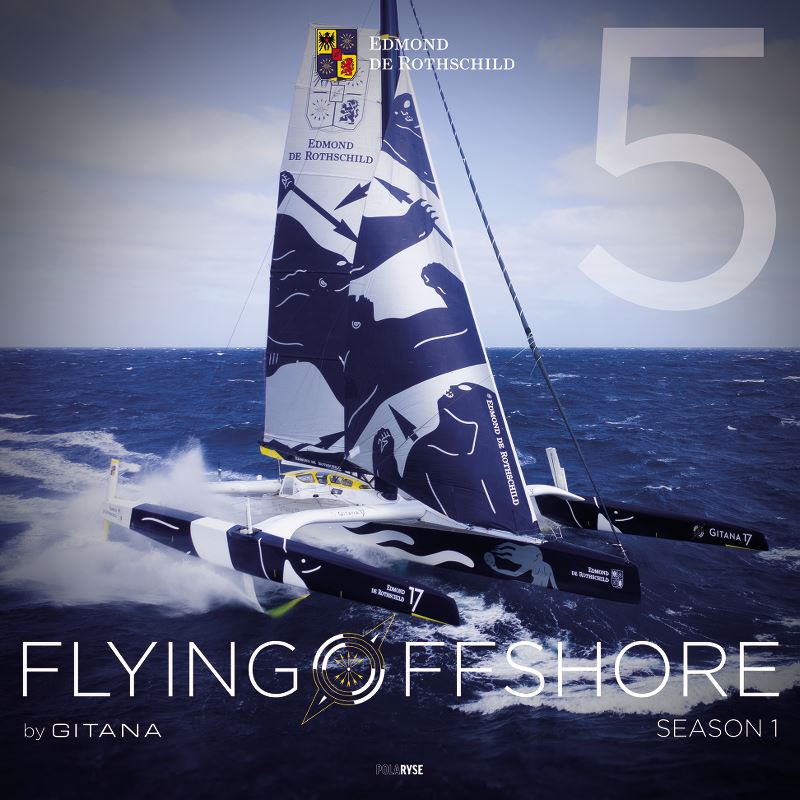
Out on the water, it looks like it’s all systems go for Franck Cammas, Charles Caudrelier and their four crew. Their names are added to the history books as they round the Cape of Good Hope, in South Africa, and post the fastest passage of all time; an intermediate record, which they dedicate to their owner Benjamin de Rothschild, who had passed away suddenly just days earlier. The weather forecasts for the Indian Ocean raise expectations of having a slight edge over the record on passing Australia. However, late morning on 22 January, there’s a message from the boat… It’s short and to the point and announces major damage to the rudder. The attempt comes to a sudden end. The part in question, which is essential to both performance and safety, has suffered a clean break that cannot be repaired at sea. The men of Gitana Team are forced to give up. Another story begins… the six sailors are positioned at 50° South and must quickly decide whether to turn back or to change course to shelter from the trains of depressions regularly sweeping across the zone. How do you deal with the disappointment, the frustration? And how do you contemplate the future?
Discover the whole of season 1 of Flying Offshore at www.ouest-france.fr