








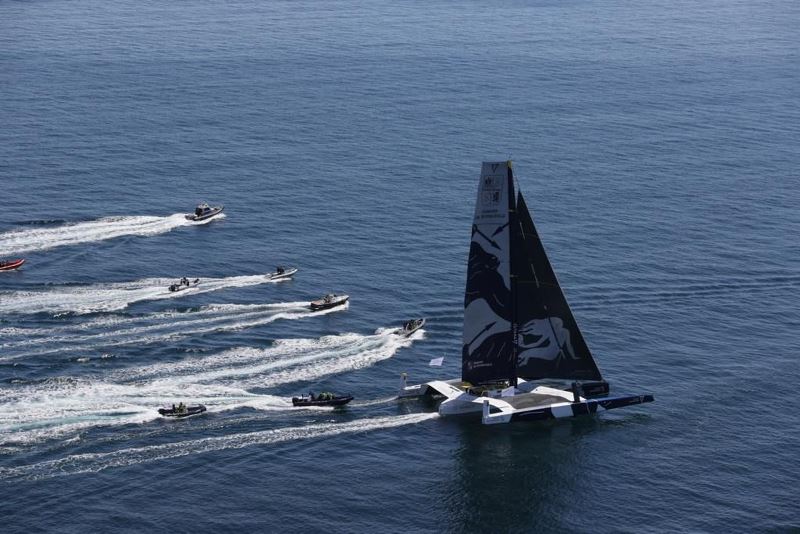
Figaro sailors very at ease on their home waters
Posting a very fine start, nicely positioned close to the committee boat, the Maxi Edmond de Rothschild quickly took control of the fleet and was first around the yellow east cardinal mark at Glenan before favouring the inside track across the bay, leaving the archipelago to port. Actual then mirrored Gitana 17’s move, whilst Armel Le Cléac’h and Thomas Coville opted for a more offshore route, leaving the islands to starboard. The option taken by Charles Caudrelier’s men appears to have paid off since they were leading the way at the latitude of Penmarc’h at the 15:00 UTC position report.
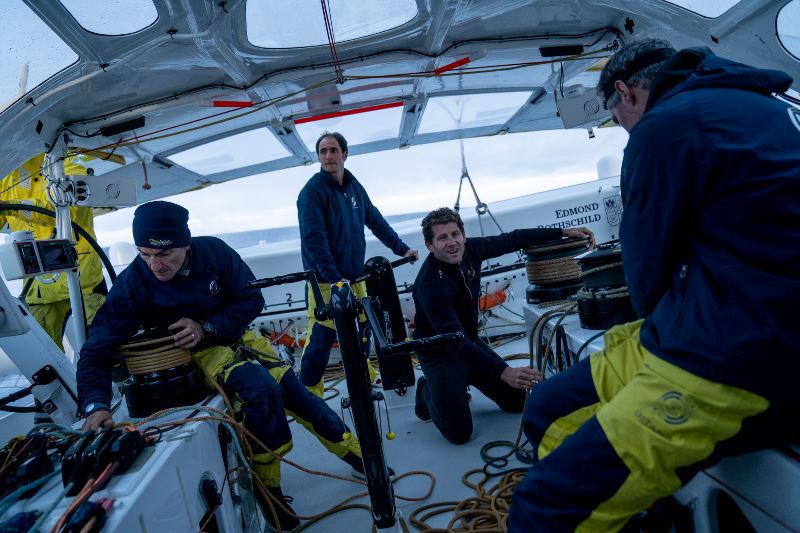
“The crew is one of our assets”
The Finistère Atlantique – Challenge Action Enfance makes its debut then and with it comes an unprecedented 3,163-mile course across the North Atlantic. It’s a distance which compares to that which awaits Charles Caudrelier this November in the legendary Route du Rhum. However, that’s where the similarities end since the Maxi Edmond de Rothschild will be racing in crewed format across the Atlantic over the coming days. The line-up comes as no surprise. Indeed, the crew comprising Charles Caudrelier, Franck Cammas, Morgan Lagravière, David Boileau, Erwan Israël and Yann Riou, has remained the same since 2019 and already boasts several feats of arms to its credit, including two victories in the Rolex Fastnet Race (2019, 2021), the Drheam Cup as well as two cracks at the Jules Verne Trophy.
“We have the luxury of being able to opt for stability and a long-term work-up with Gitana Team. This crew knows each other inside out now and works in perfect harmony. We all have extensive knowledge of the Maxi Edmond de Rothschild and each of us has racked up a lot of miles and experience aboard the boat. We also really enjoy sailing together, which is key to performance to my mind,” admitted Charles Caudrelier. “Despite the fact that I’ve become the solo skipper of the Maxi this year, with the target of the Route du Rhum, Franck and I will operate in a virtually identical manner. However, I’m going to make the most of having two of my Rhum routers with me (Erwan and Franck) to devote all my time to trimming, steering and getting the boat making headway, whilst leaving them to work together on the navigation and weather aspects, which is a job that Franck and I previously shared.”
Proving that these two sailors, whose complementary natures no longer need an introduction, overcame the divide of titles and roles many moons ago, it was Franck Cammas who was at the helm at the start to take the Maxi Edmond de Rothschild offshore.
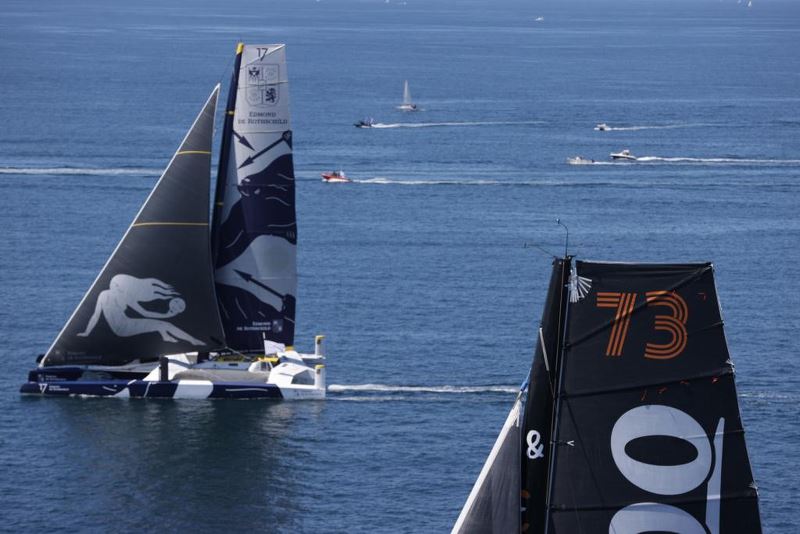
A varied forecast across the course
Charles Caudrelier explained the situation yesterday after the weather briefing: “the start will be complicated because there won’t be much breeze. We’ll have to get off to a good start and extract ourselves nicely so that we’re the first to hook onto the steadier breeze that awaits us offshore.”
So, it’s job done at the start for the men of Gitana Team!
The journey southwards, and the notorious Cape Finisterre, won’t be possible on a direct course alas. In fact, it won’t be until late in the day, or in the evening on Saturday that the front runners will have to negotiate the north-west tip of Spain. Once there, the fleet will experience a change of atmosphere with more boisterous, shifty conditions expected offshore of the Iberian peninsula due to the thermal low pressure system centred over Spain. Right now, the trade wind seems to be in position with a moderate 15-20 knots of NE’ly wind, which will propel the Finistère Atlantique Challenge Action Enfance fleet towards Madeira and then on to the Canaries. Their current ETA for this passage is set for very early next week.

Action Enfance, a partner that gets stuck in
On Thursday morning, the day before the start, the skippers competing in the Finistère Atlantique accompanied around twenty children and adolescents from the ACTION ENFANCE foundation to the Glénan archipelago, where they were able to share some quality time and relish their exchanges at the heart of what is an exceptional backdrop.
The encounter was also an opportunity for the four sailors present – Charles Caudrelier, Armel Le Cléac’h, Thomas Coville and Amélie Grassi – to provide a valuable insight into the marine universe to these children who’ve had a tough life and had no previous knowledge of the sea.
The morning rounded off with a tour of the four maxi-trimarans dockside in Concarneau for the children, who were impressed and curious to know what the living conditions were like aboard these giants of the seas.
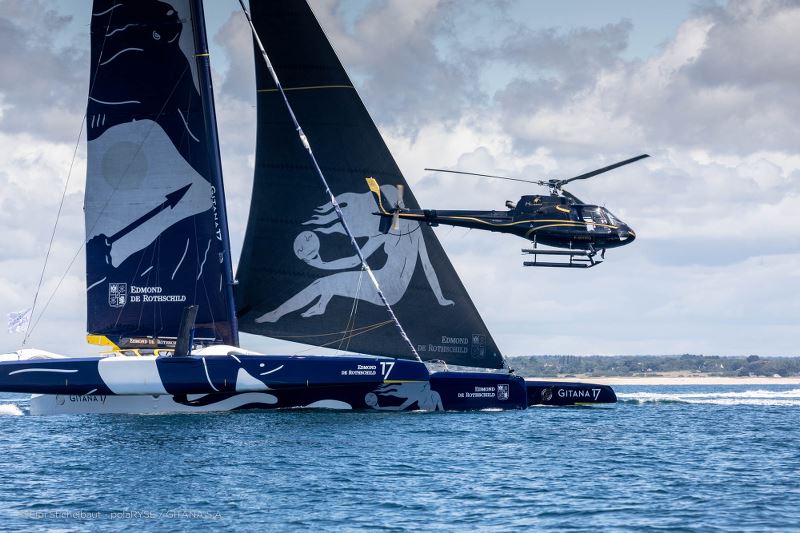
The Finistère Atlantique Challenge Action Enfance
3,163-mile course across the North Atlantic
Concarneau, the Glénan archipelago, Madeira, Lanzarote (Canaries), Santa Maria (Azores), Concarneau (Brittany)
Crew on the Maxi Edmond de Rothschild
Charles Caudrelier, skipper
Franck Cammas, helm, navigator
Morgan Lagravière, helm, trimmer
David Boileau, trimmer, bowman
Erwan Israël, helm, trimmer
Yann Riou, media crew, helm
The entries
Maxi Edmond de Rothschild
Banque Populaire XI
Sodebo Ultim 3
Actual Leader