A tailored organisation
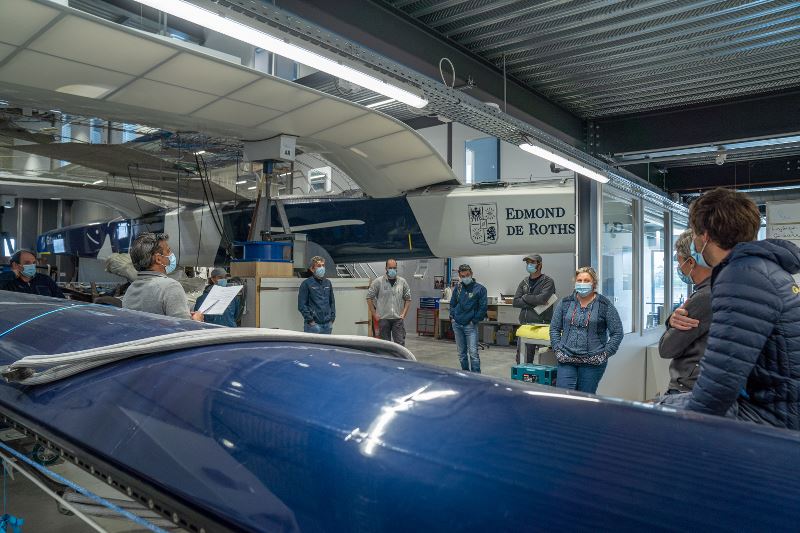
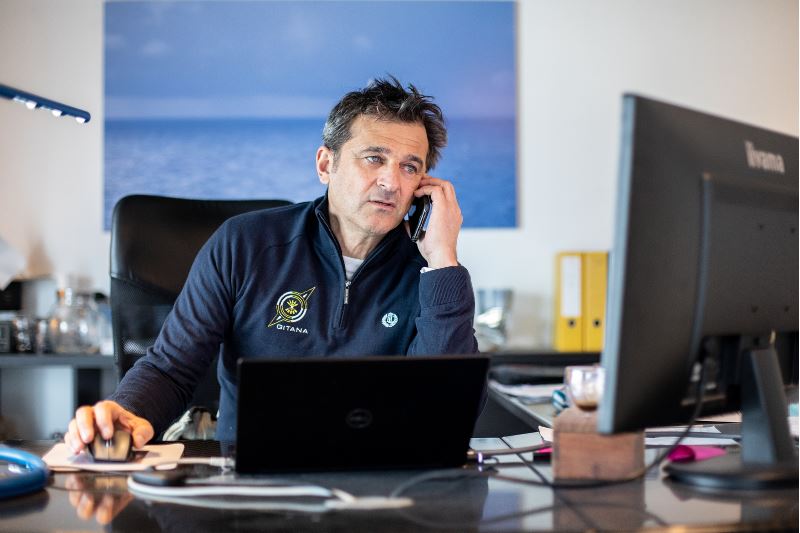
After nearly two months at a standstill, the racing stable founded by Ariane and Benjamin de Rothschild has been able to reopen its doors. Cyril Dardashti, who has headed up Gitana Team for over ten years, has been working hard in the run-up to this resumption of activity on 11 May to provide the twenty or so members of the team with suitably safe working conditions.
“The initial reaction was geared around my team and their health, which is why we closed the base on 17 March. Our professions and the close proximity of our interventions, which often involve work in pairs during the refit operations, made it impossible to adhere to the required physical distancing measure using special equipment. Today, the situation is different and everything has been set up to ensure that the majority of the team can return to their post in favourable conditions.
With regards to the refit element, since yesterday we’re back up to a working capacity of 80% by staggering the team’s hours and splitting the team into two groups so that the base is never overcrowded. Some of the team start earlier and others finish later, and that enables everyone to work with confidence. Meantime, the members of the design office are continuing to work remotely as that is feasible for them. As for Franck and Charles, they’ll have to wait a little longer before they can get back down to work and the open ocean, but they’re making the most of this time to step up their physical fitness regimes”, explained the team manager.
Adaptation of the 2020 schedule and sports objectives
The 2020 sailing season for Gitana Team was initially supposed to be split into two main phases. Indeed, the first part of the season was set to involve Franck Cammas competing in The Transat singlehanded at the helm of the Maxi Edmond de Rothschild, followed by a switch to crew configuration for a set of record attempts in the North Atlantic over the summer and a Jules Verne Trophy attempt in the autumn.
Charles Caudrelier, one of the two skippers of Gitana 17, outlines the changes to us, together with the new road book envisaged with the team to date: “Following the cancellation of The Transat by its organisers, we’ve written off the first part of the season and also the North Atlantic, because in the current situation it’s not feasible to have any sort of stand-by in New York. However, the Jules Verne Trophy, with the start of a weather stand-by set to begin in October / November, is maintained. We hope that in the meantime, conditions will play out to enable us to set sail on this fantastic crewed non-stop round the world sprint.
We’re going to launch the Maxi Edmond de Rothschild in early June, get in some training and continue with our fine-tuning. Over the course of the summer, we’ll have to snap up any opportunities that come our way according to how the situation evolves. We’re interested in the Drheam Cup with its 1,100-mile course for the Ultimes, as well as the Record SNSM, which is set to be relaunched in June using the principle of a start line being open for several weeks, as well as the Trophée des Multicoques in late August.”
“Following the cancellation of The Transat, we’ve had a change of heart. However, we’re very lucky because from the get-go we’ve had versatile boat at our disposal, which works as well sailing solo as it does for crewed format and above all we can count on the support of the boat’s owners and the Edmond de Rothschild Group, who are always present alongside us and who enable us to quickly bounce back”, explains Cyril Dardashti.
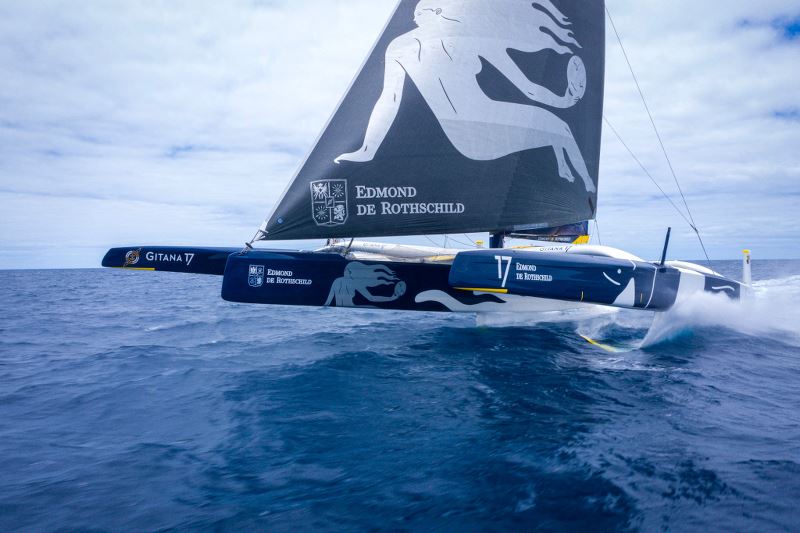
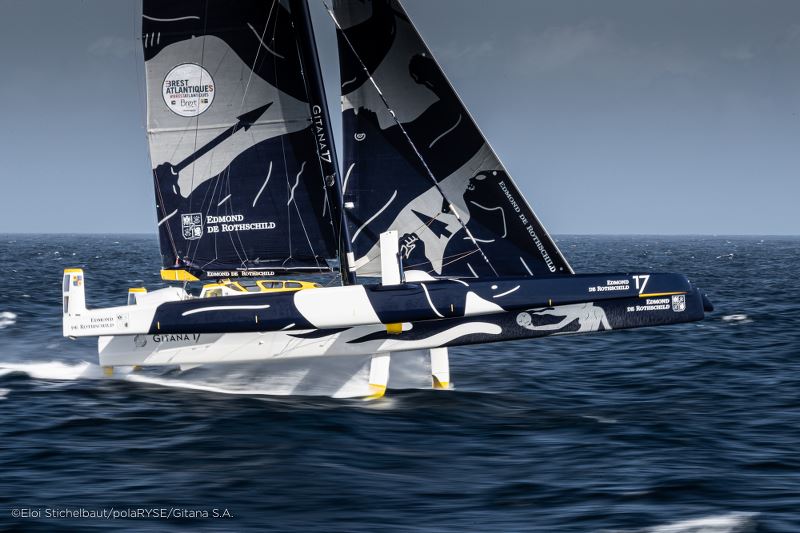
With the first part of the season set to include two transatlantic passages, which would have put the 32-metre giant under pressure, the Maxi Edmond de Rothschild was due to head back to her base in Lorient in August for a short refit to check for any wear and tear and implement any developments envisaged by the in-house design office. However, in light of the cancelled events and the fact that it’s been impossible to sail, it’s been decided to optimise the time in refit and extend the current jobs list so as to combine the two phases in one. In this way, Gitana 17 will come out of her shed in early June so she can head offshore as soon as possible.
Speaking as one
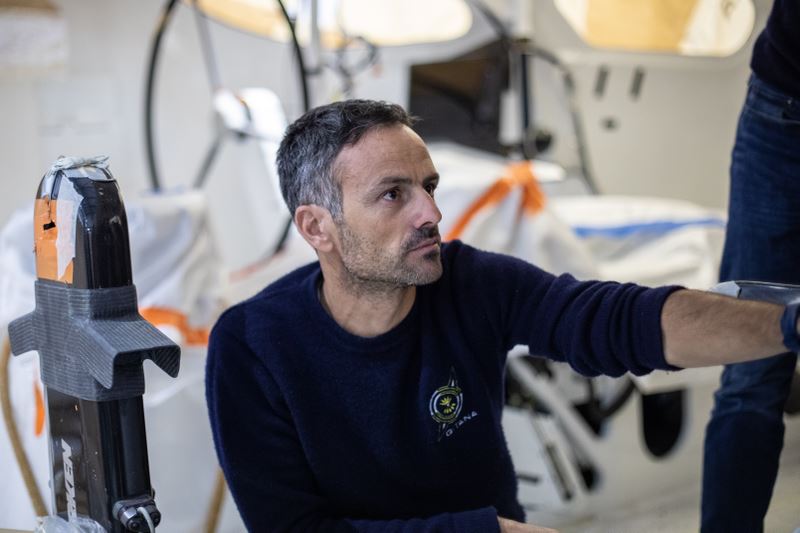
Last Tuesday, at the invitation of the French Sailing Federation (FFV), Franck Cammas, one of the skippers of the Maxi Edmond de Rothschild took part in a meeting to discuss what needs to be put in place in offshore racing with a view to the resumption of marine activities.
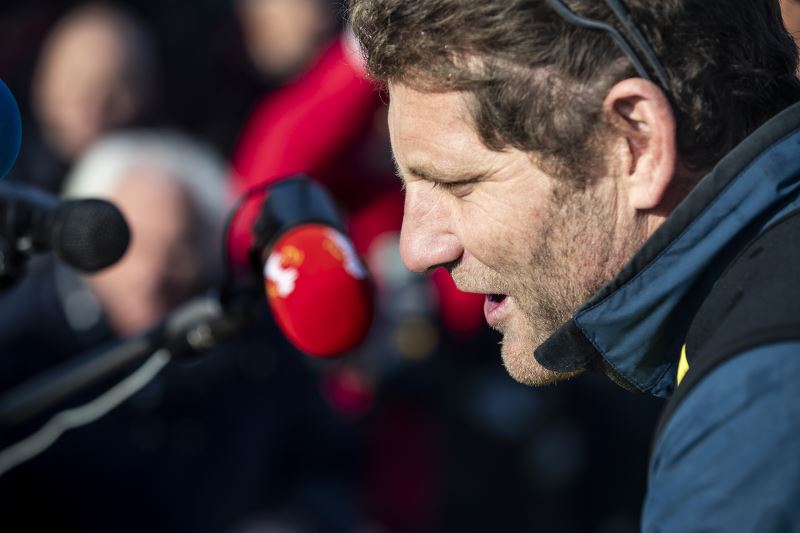
“Everyone is keen to resume their professional activity, but we are aware that to do that, operations must be gradual, in stages. To our mind, as professionals of the sea, there is an initial phase, which relates to technical trials and training sessions. This is followed by a second stage, from July, to get back on the road to offshore sports clashes. In order for these first events of the summer to be held in the best possible conditions, it will be important to adapt to the constraints linked to the crisis we’re going through.
For this reason, it seems obvious to us that these summer meetings should mainly focus on the sporting dimension, thus avoiding public gatherings and non-essential movement. Sailing is a sport which is very good at enabling that. The values related to sharing our sport with the public must obviously remain a key element, but this exceptional closed-door formula geared around offshore racing is a necessary transition to our mind. In fact, this second stage is essential to guarantee qualification passages for other races, as well as to continue and validate our technical preparations with a view to the major events in the second half of the year like the Solitaire du Figaro, the Vendée Globe as well as the Jules Verne Trophy.
Discussions on this topic are highly constructive and it’s important to be able to discuss any problems with a representative panel of offshore racers to notably help the FFVoile to propose to the Ministry of Sports and Maritime Affairs with realistic and coherent solutions for our professional and sports practice.”