








Heritage

Season 26
Types de médias
  • Photos
  • Vidéos
  • Sons
Années
  • 2026
  • 2024
  • 2023
  • 2022
  • 2021
  • 2020
  • 2019
  • 2018
  • 2017
  • 2016
  • 2015
  • 2014
Afficher les résultats (121)
supprimer tous les filtres
  • News
  • Gallery
  • Gitana 18
  • Team
  • Retractable Y-shaped foils, adjustable in three dimensions

    Inspired by the appendages of the America's Cup foiling monohulls, these Y-shaped foils have a wingspan of over 5 metres. They are designed to generate powerful lift, increase power and offer a wide range of adjustments to optimise flight at every point of sail and in all conditions. Beyond their impressive size, these foils feature many unique innovations.

    Revolutionary U-shaped rudders

    These are probably the most visually striking innovations on the new Maxi Edmond de Rothschild. To fly high above rough seas while maintaining control, the team wanted very long rudders that would remain in contact with the water. The challenge is that longer rudders tend to flex under load, severely affecting steering and the efficiency of their lifting surfaces. A new geometry was needed to give these appendages maximum stiffness, resist cavitation and ultimately improve control of the boat and make better use of its power. The result is a set of U-shaped rudders over 4 metres long, a metre longer than those on Gitana 17. Their shape, reminiscent of a tripod or an inverted π, is only the visible part of what makes them so distinctive.

    A daggerboard optimised to stabilise the boat and limit cavitation

    With its wide span, the daggerboard resembles an aircraft tail assembly, with two adjustable flaps: one on the vertical section and the other on the horizontal section, the distinctive “manta-ray wing”. On Gitana 18, the innovation is to position this wing behind the vertical part of the appendage, rather than directly beneath it, to minimise flow disturbance and cavitation.

    Gitana 18’s daggerboard

    Rig: adjustable spreaders to control mainsail power while sailing

    Gitana 18’s mast is 1.50 metres taller than its predecessor’s. The boom is also shorter, creating a more slender sail plan. The major innovation is a set of spreaders that can be adjusted while sailing to bend the mast fore and aft. Actuated by hydraulic rams, these spreaders can pivot through 35 degrees to adjust the bend in the middle of the mast. This unprecedented system allows the sailor to control mainsail power: adding depth in light winds to take off sooner, or flattening the sail to reduce power at high speed or in strong winds. Adjusting the depth, and therefore the power, of the mainsail can also save a solo sailor time and energy by reducing the need for risky manoeuvres or headsail changes.

    Central hull:
    an integrated, structural coachroof

    The naval architects and Gitana design team wanted an exceptionally stiff, structurally robust platform. This applies both to the floats, which must withstand heavy loads from the foils and rudders, and to the central hull, which is subject to torsion. The enclosed coachroof is integrated into the hull and contributes to its structural strength. Inside, the cockpit brings all sail-handling controls together, with ergonomics shaped by many hours of design and development. The coachroof also stands out for the number and size of its windows. This configuration meets the visibility requirements of the Ultim class rules and gives sailors the best possible view to keep a visual watch.

    Gitana 18’s coachroof

    28.09.2024

    In the starting blocks for the Finistère Atlantique in Brittany.

    In a few hours’ time, shortly after 13:00 hours local time weather permitting, the second edition of the Finistère Atlantique will set sail from Concarneau in Brittany. A race dedicated to ULTIMs, the event will see five crews, including that of Charles Caudrelier, do battle on a brand-new course bound for Antibes in France’s Alpes-Maritimes depart…

    par Gitana

    In a few hours’ time, shortly after 13:00 hours local time weather permitting, the second edition of the Finistère Atlantique will set sail from Concarneau in Brittany. A race dedicated to ULTIMs, the event will see five crews, including that of Charles Caudrelier, do battle on a brand-new course bound for Antibes in France’s Alpes-Maritimes department. This Mediterranean finish in fleet format is unprecedented among the 32-metre giants and a major first for the Maxi Edmond de Rothschild, which has yet to foil on the waters of the Med. With an estimated race time this Saturday of around five days, the champions will likely be decided offshore of Port Vauban on Thursday 3 October.
    2024, Antibes the new finish port 

    2022 saw the birth of the Finistère Atlantique: a long, looped circuit of 3,163 miles around the North Atlantic, which took the ULTIM fleet from Concarneau to Madeira, the Canaries, then the Azores, before they powered back up towards the Glénan archipelago where the victors in the first edition were crowned. Going right to the wire, it was the crew of the Maxi Edmond de Rothschild who secured the win a little over 26 minutes ahead of Banque Populaire.     

    Two years on, the event is back. Still contested in crewed format and setting sail from the same walled town in France’s Finistère region, this time the course will conclude in the Mediterranean, with the grand finale of the 2024 edition being decided in Antibes in the Alpes-Maritimes in 5 to 6 days’ time. As such, the five competing crews will be tackling a unique and demanding course spanning nearly 1,700 nautical miles.   

    In the Breton sunshine   

    Like the start of the offshore course in the 24H ULTIM, which took place in early September in Lorient, conditions are forecast to be very mild offshore of the Breton coast this Saturday with 5 to 6 knots of SW’ly wind on the programme. These light airs might well prompt Race Director Francis Le Goff and his teams to delay play slightly before releasing the fleet onto this long course down to the azure waters of the Mediterranean. However, this period of calm will be short-lived since another low-pressure system is already looming in the Atlantic and is set to spice up conditions out on the racetrack from the first night at sea.     
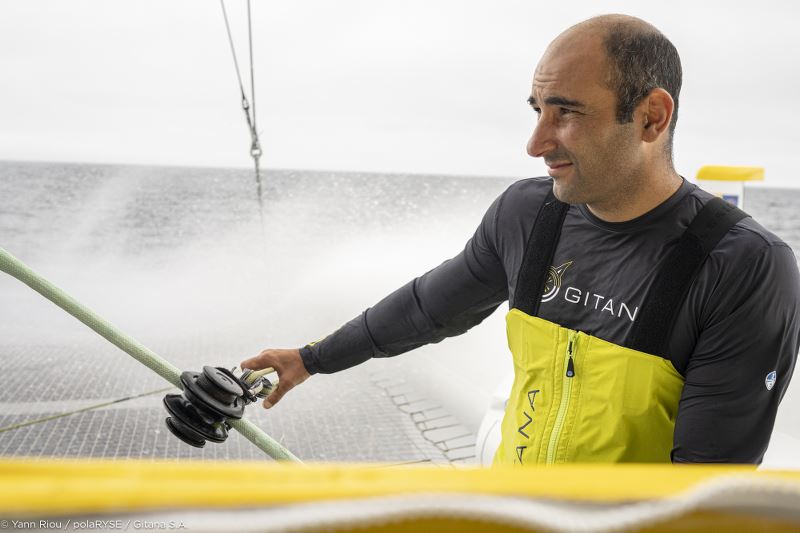
    Benjamin Schwartz, recent winner of the Normandy Channel Race with Fabien Delahaye, is one of two newbies aboard the Maxi Edmond de Rothschild. During the Finistère Atlantique, his primary role will see him take charge of the weather strategy. Just a few hours before the start, he shared with us the outlook for the first 36 hours of racing: “The last two days have been punctuated by a series of very active low-pressure systems rolling through but today’s start will see some anticyclonic conditions temporarily returning to France’s shores. We’re hoping that a light thermal breeze will step into the breach so we can set sail. We may have to wait around until a little after 13:00 hours, the scheduled start time initially, to gently make headway upwind and extricate ourselves from the bay of Concarneau. The pace and the atmosphere are then set to change very quickly though as the first night will see us hunting down a low-pressure system in the Bay of Biscay. Depending on where we choose to tack before diving down towards Cape Finisterre, the wind may pick up to 35-40 knots with building seas. As such, the crew is in for a fair few sail changes for the start of the race. The first 36 hours are going to be lively so we’ll have to get straight into the thick of things and roll with the punches.”   

    Defending their title 

    Four of the six sailors on the Maxi Edmond de Rothschild are defending their title in this Finistère Atlantique and are well aware of how heated things are set to become out on the racetrack.     
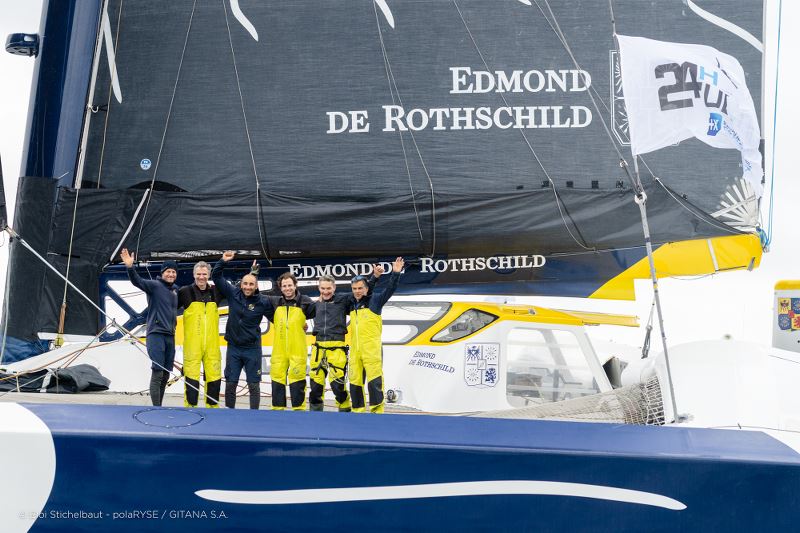
    The thirty-one sailors in the starting blocks for this event are unanimous on this point: With the ULTIM fleet very evenly matched, we will likely be in for a full-on and intriguing close-contact race. Winners of the 24H ULTIM a few days ago, the crew of Maxi Edmond de Rothschild is just as motivated as ever and very much looking forward to this next race of the 2024 season. Both the event format and the timing are perfect for honing the crew as they prepare for a crack at the upcoming Jules Verne Trophy, which is due to round off their season.   

    The course for the Finistère Atlantique 2024   
    1,678 miles from Concarneau to Antibes       

    Crew on the Maxi Edmond de Rothschild   

    Charles Caudrelier 
    Erwan Israël 
    Benjamin Schwartz 
    Julien Villon   
    David Boileau 
    Yann Riou     

    Follow the race: http://www.gitana-team.com/fr/tracker/