








Keeping up the pressure
After setting sail from Le Havre last Sunday, the ULTIMs, currently the only fleet out on the racetrack in this Transat Jacques Vabre, are focused on traversing the doldrums this Saturday as they make their way towards the equator.
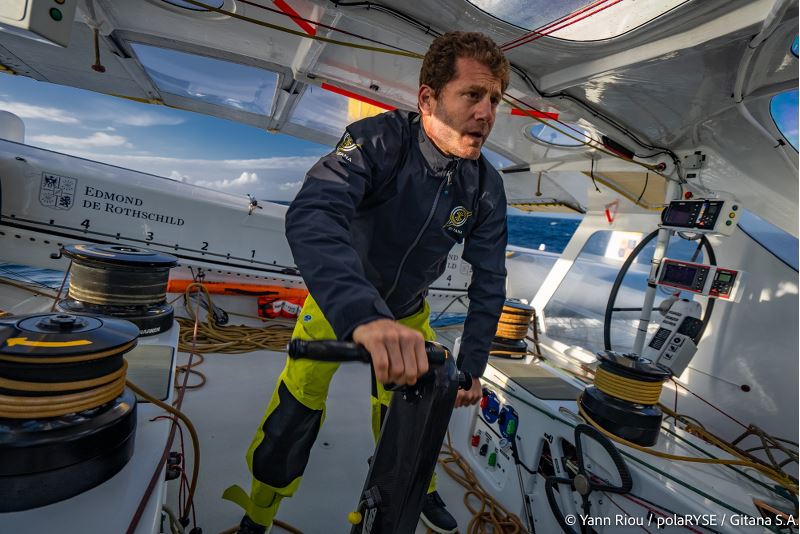
During this morning’s radio link-up, Charles Caudrelier gave a brief low-down of the past few hours of racing in what has been an intense first week at sea, during which the five-arrow giant has covered nearly 3,000 miles, or the equivalent of a transatlantic passage: “Yes, it’s tiring. The race is tiring and for now the rich just keep getting richer… We’ve been making headway directly in the wake of Armel (on Banque Populaire) by putting in lots of gybes, whilst he’s been on a straight-line course! In fact, we’ve been manoeuvring a great deal over the past few hours. The breeze has been strong with unpleasant seas, so it hasn’t been easy to find the right balance between the autopilot and the helm as the pilot has been struggling to perform well and after a while we tire at the helm. We’ve also had a few issues to deal with too so we haven’t been able to go very fast on this long tack. We’re all shipshape again now though, so we just need the doldrums to give us a bit of help to close on Banque Populaire, which has been sailing a very fine trajectory and a great first section of the race. That way we can go on the attack at the end of the course where there are two quite interesting sections to negotiate. It’s worth noting that we’re not at the halfway mark yet. There’s still a long way to go!”
Meteorological toll to pay before the southern latitudes
All round the world sailors are familiar with this zone, as it is a compulsory passage to gain entry to the southern hemisphere. Some dread it, whilst others have a more fatalistic approach. One thing for sure, this inter-tropical convergence zone, where the warm masses of air from the NE’ly trade wind collide with those of the SE’ly trade wind, is never short of surprises be they good or bad!
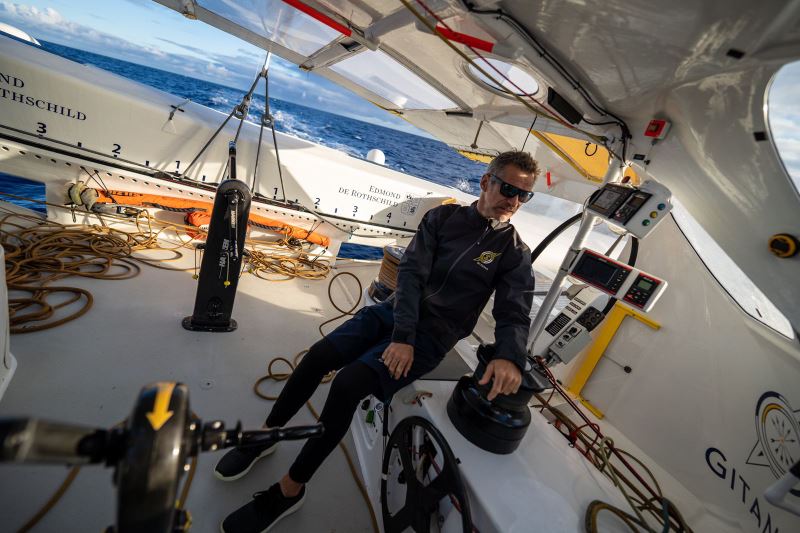
Charles Caudrelier was keen to point out today that he’d traversed the doldrums more times in his career than he’d rounded Cape Horn, so he had plenty to say on the subject: “Right now, the doldrums look fairly easy. I don’t know that it’s a good thing for us as we’re behind, but according to the latest observations the clouds are not very dynamic. I’ve experienced far worse doldrums passages. The negotiation of this zone can be a tense passage, but that was especially true during the days of ORMA or the MOD70, as they were the kind of boats that were a bit full-on when they were carrying too much sail. We have a bit more leeway. The boat is bigger, so she requires a little more manoeuvring, but she’s better at coping with being hard pressed, which is reassuring. We also have more and more anti-capsize systems now and we’re routed, so our weather cell warns us of any squalls. As a result, the key stress factor relates to reefing and finding ourselves without enough power. Each time that happened, my main stress was that I would be overtaken whilst I was at a standstill… In fact, back in 2021 with Franck during this same race, we entered the doldrums with a good lead – 200 or 300 miles – and it was Armel who almost managed to pull level with us. What’s more, it was just at the exit gate that we were able to extend away again by escaping the zone a fraction earlier. It is sometimes the case that something minor can make all the difference: one cloud, one line of squalls. Our boats can negotiate the doldrums very quickly. If there’s just a sniff of breeze, we can very quickly pick up the pace to 20 knots and we don’t have to endure a rather laborious 300 miles for half a day. We can also take double that time or worse if there’s no breeze. It can be a whole different ball game depending on your passage time. Things change very quickly from east to west in this zone so you have to monitor the on-board radar and the satellite images from our routing cell. There are no magic solutions in the doldrums and experience does not give you greater certainty. It’s a constantly shifting zone and you have to be able to read between the lines of clouds.”
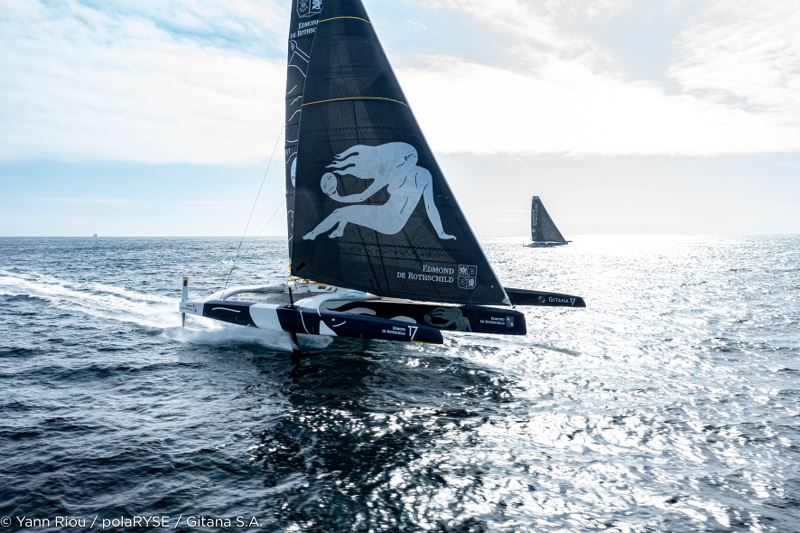
On shore, Gitana Team’s entire weather cell, which this year comprises Erwan Tabarly, Simon Fisher and Chris Bedford, has been mobilised. The guys are taking turns to remain glued to their computers 24/7 to help map out the best possible route for the crew of the Maxi Edmond de Rothschild. Since this morning, they’ve been pouring over the weather forecasts and the satellite images in particular so they can constantly adjust their real-time exit trajectory for the equator and the southern hemisphere.
Position report on 4 November, 17:00 hours
- 1. Maxi Banque Populaire XI some 4,420 miles from the finish
- 2. Maxi Edmond de Rothschild (Charles Caudrelier / Erwan Israël) + 57.3 miles
- 3. SVR – Lazartigue + 97.3 miles
- 4. Sodebo Ultim 3 + 186.7 miles
- 5. Actual Ultim 3 + 313.7 miles