








A far from standard weather window
Since Friday morning, the skippers of the Maxi Edmond de Rothschild and their router, Marcel van Triest, have been eyeing up a serious opportunity to finally get things underway in their sprint around the planet. However, from one grib file to the next, a series of discrepancies have made a tough choice even harder for the weather cell. Ultimately, true to the team’s philosophy of being bold and committed, early this Sunday afternoon the large flying trimaran fitted out by Ariane and Benjamin de Rothschild set sail on this iconic record of offshore racing.
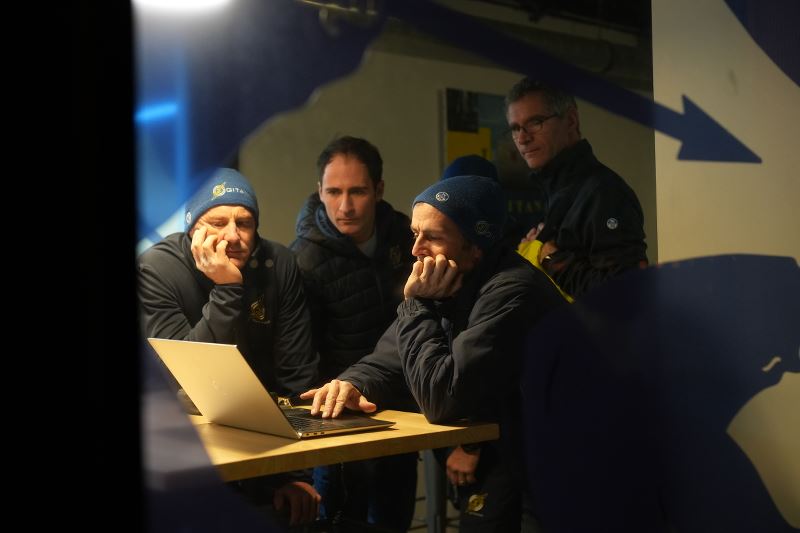 Like Charles Caudrelier, all the members of Gitana Team freely admit that “the weather window is rather atypical,” a choice that the recent winner of the Route du Rhum-Destination Guadeloupe explains in more depth: “though we have a very precise idea of what may happen in the North Atlantic, the same cannot really be said in the South Atlantic. A low pressure system to the south of Brazil is a little uncertain according to the weather models.”In short, the team will have to locate “a bolt hole”, says Morgan Lagravière and “have a bit of luck with the sequence of weather systems,” continues Franck Cammas. However, the first few days at sea have been well identified with “upwind conditions to start and a front to hunt down tomorrow,”explains Erwan Israël. If the weather sequence subsequently proves less favourable, the crew reserves the right to turn back level with the Canaries in a bid to hunt down a better launchpad from the tip of Brittany.
Focused, determined and particularly enthusiastic, the six crew on the Maxi Edmond de Rothschild have set sail on their first attempt of the year, the third in all for the Verdier design following two aborted campaigns in 2020 and 2021. The latter came to an end after 12 days of racing at the entrance to the Southern Ocean, with the team ahead of the record having just secured the best ever time to the Agulhas Cape. Though setting sail in mid-February might appear quite late in the season, some has set off even later in the day, including Sport-Elec (Olivier de Kersauzon, on 8 March 1997) and Orange II (Bruno Peyron, on 2 March 2002).
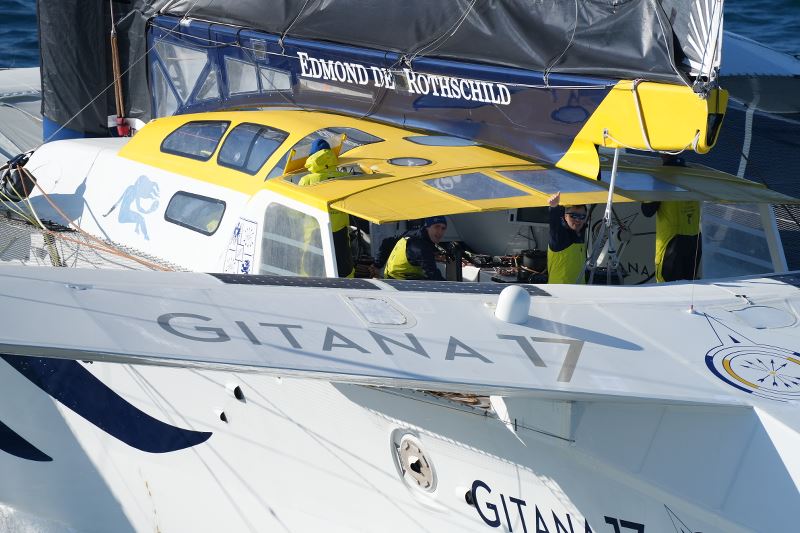
Charles Caudrelier, Franck Cammas and their crew now have their eyes glued to the upcoming waypoints, particularly one offshore of South Africa. “We need to have a lead of at least 24 hours over Francis Joyon’s passage time at the Cape of Good Hope (12 days, 19 hours),” stresses Charles. As a result, the team has a set of well identified goals and the race against the clock is most definitely on!
Quotes of the crew:
Charles Caudrelier: “It’s a fairly atypical weather window, but we’re getting to the end of standby and we’re keen to give it a go, especially with the grib files indicating some good passage times yesterday evening. Though we have a very precise idea of what may happen in the North Atlantic, the same cannot really be said in the South Atlantic. There’s a low pressure system to the south of Brazil, which is a little uncertain according to the weather models. However, we’ve decided that it was worth having a go, even if we have to turn back when things don’t play out that way. The aim is to get as far as possible. One of the areas where we can gain the most time in relation to the previous record is in the Atlantic. We need to have a lead of at least 24 hours over Francis Joyon’s passage time to the Cape of Good Hope (12 days, 19 hours). He set the bar very high and we know his record is going to be a tough nut to crack. The toughest thing about this record is managing to finish with a boat at 100% of her capacity. That said, we believe the Maxi Edmond de Rothschild has reached maturity!”
Franck Cammas: “It’s the first time we’ve crossed the start line this year. We’re well aware that if we are to pull off this record, it’s important to have a bit of luck on our side with a good sequence of weather systems. The days we lose during the first phase could well be detrimental to the record, which is why we’ve taken time to set sail. We cannot afford to waste any time, especially as the reference time posted by Francis (Joyon / IDEC) is very good in the southern hemisphere! To break records, you first need to have a go.”
Morgan Lagravière: “I wasn’t really worried about whether we’d set sail. When you see how dynamic Charles and Franck are, we knew we were going to go for it. It’s a powerful moment, it’s also a moment when you’re bidding farewell to family, so emotions run high and there’s a sense that you’re united in the moment. Overall, it’s a very positive sentiment. After that, we have to keep a cool head as we know that there are a fair few uncertainties with this weather window. We really want to get down into the Southern Ocean. It’s a box I’m yet to tick in my career. The boat’s exceptional, the crew’s excellent: these are very good conditions for enjoying ourselves and doing something truly unique. We’re going to believe that luck is on our side and that the planets are aligned in terms of the weather.”
David Boileau: “Naturally, our mindset is a conquering one! We’ve been waiting for a month and a half so inevitably we’re very happy to be setting sail. There’s a sense of release for all of us. We know that the weather window isn’t great, but we’re going for it and we’re going to try our luck. If the weather doesn’t prove so favourable, we’ll turn back and we’ll wait for the next one. However, things are moving forward and we’re keen to have some fun and give our all!”
Erwan Israël: “It’s only the second time I’ve changed my clothes in the boat since the start of standby (laughs)! Ultimately, we’d never really planned to set sail, but this is the one this time! Inevitably, we were all a bit fed up with standby and monitoring the weather… Right now, we’re delighted, we’re all smiling and we believe in it. Though there is some uncertainty, the North Atlantic is pretty good and the weather window is interesting. We’re going to head upwind and hunt down a front tomorrow, which makes the challenge all the more appealing!”
Figures to note:
Crossing of the line: on 12 February 2022 at 13h 09min 30s UTC
Deadline for the finish to beat the record: 25 March 2023 at 12h 38min 59s UTC
Latest date to begin a record attempt: 8 March (in 1997, Sport-Elec)
Record to beat: 40 days, 23 hours and 30 minutes => Record held by Francis Joyon and his crew (Idec Sport) since 26 January 2017.
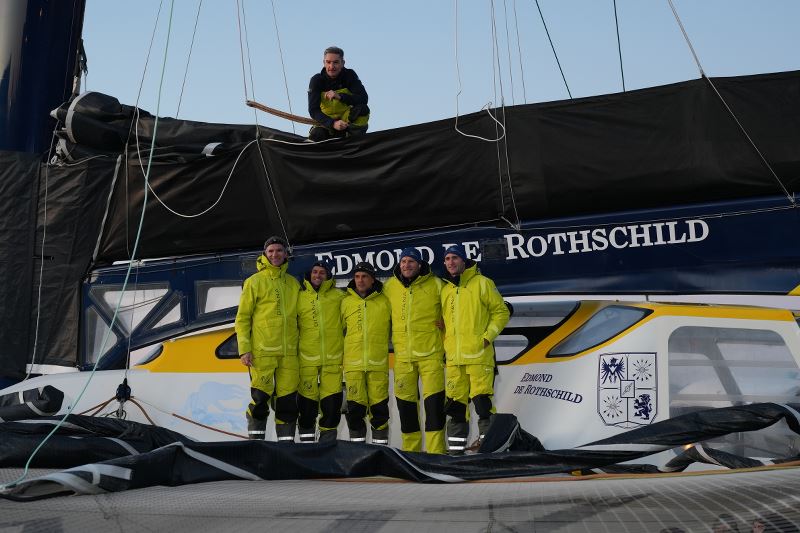
Crew on the Maxi Edmond de Rothschild
Franck Cammas and Charles Caudrelier, skippers
David Boileau, trimmer bowman
Erwan Israël, helm trimmer
Morgan Lagravière, helm trimmer
Yann Riou, trimmer on-board reporter